Podcasting
·
Oct 15, 2026
From Sticky Note to Show Idea: Finding Your Podcast Concept

Arif Gursel
Founder

Every podcast you love started as a half-formed idea someone couldn't stop thinking about. Maybe it came in the shower, on a bus ride down Third Avenue, or in the middle of a conversation where a friend said, "You should really record this." If you have an idea like that rattling around, this series is for you. Over the next 24 posts, we'll walk you through starting a podcast at The Union, from the first spark to the day your show lands in listeners' ears and keeps growing.
Welcome to the series: four stages, one show
We've organized the series the way real productions move, in four stages:
Content Strategy: finding your concept, knowing your audience, naming your show, planning formats and episodes. This is where we start today.
Production: recording setups, working with hosts and guests, running a session that sounds and looks professional.
Post-Production: editing, mixing, clips, show notes and everything that turns raw files into a finished episode.
Distribution: hosting, publishing, promotion and building an audience that comes back.
Along the way, we'll show you how The Union, a nonprofit community, coworking and creative media production space in downtown Seattle, supports each step. We opened our doors on Juneteenth 2018, and today we're the longest-running modern coworking and creator space in the Pacific Northwest, built to center and uplift Black culture, creativity and storytelling. We're a program of PACE (Pan African Center for Empowerment), a 501(c)(3). The short version: we exist so you don't have to own gear or know everything before you begin. You bring the story. We help with the rest.
Meet Tasha, our example creator
To keep this practical, the whole series follows one illustrative creator. Tasha (an example we've created for this series, not a real member) teaches middle school science in Rainier Valley. Every week, her students ask questions that stop her in her tracks: Why do cats always land on their feet? Can you sneeze with your eyes open? Where does the sky end?
Parents tell her the same thing at conferences: their kids ask these questions at home too, at dinner, in the car, at bedtime, and the parents don't always know how to answer. Tasha has a hunch there's a podcast here. But a hunch isn't a show yet. Today we'll watch her turn it into a concept she can actually build on.
What a podcast concept actually is
A lot of beginners think their concept is a topic. "Science." "Money." "Seattle food." Topics are a starting point, but they're too wide to guide decisions. A real concept answers three questions at once:
Who is it for? A specific listener with a specific situation.
What do they get? The value, feeling or change they walk away with after each episode.
Why you? The perspective, access or experience that makes your version worth choosing.
Tasha's starting topic was "science for kids." That's crowded and vague. Is it for kids or parents? Is it a lesson, a story, a game? Her concept got sharper when she answered the three questions honestly.
Write your one-sentence promise
Your promise is the single sentence that tells a stranger what they'll get if they press play. Here's a simple template to start from:
"[Show] helps [specific listener] [get a specific result] through [your format or angle]."
Tasha's first draft: "My show helps parents teach science." Too broad. Her second draft: "Each episode, a middle school science teacher answers one real question a kid asked, so parents of curious kids can turn 'I don't know' into a conversation they explore together."
That second version does a lot of work. It names the listener (parents of curious kids), the result (confidence and connection instead of a shrug), the format (one real kid question per episode) and the credibility (a working science teacher). You'll rewrite your promise several times this month. That's normal. Each version should get shorter and more specific.
Pressure-testing your concept
An idea that feels exciting at 11 PM can feel thin by episode six. Industry trackers like Podcast Index list millions of podcast feeds, but only a fraction publish regularly, and many shows stop after a handful of episodes (exact numbers vary by source and change constantly). The most common reason isn't bad audio. It's a concept that ran out of road. Pressure-testing now protects you from that.
Run your idea through this checklist. Write your answers down; don't just think them.
The 50-episode test. List 50 episode ideas in one sitting. If you stall at 15, your concept may be too narrow or too dependent on one story. Tasha listed 62 kid questions from memory and student notebooks, which told her the well was deep.
The stranger test. Say your promise out loud to someone who doesn't know you. Can they repeat it back in their own words? If they can't, it's not clear yet.
The "so what" test. For each part of your promise, ask "so what?" until you hit a real human need. Kids ask questions. So what? Parents feel unprepared. So what? They miss a chance to connect with their kid. That's the need.
The format fit test. Does this idea actually work as audio (or audio plus video)? Some ideas want to be a newsletter, a YouTube tutorial or a course. Tasha's works in audio because families can listen together in the car.
The energy test. Would you make episode 30 even if only 40 people listened? Early growth is usually slow. Your curiosity has to carry you through that stretch.
The sustainability test. Estimate realistic time per episode. Many beginners need several hours per finished episode once you count prep, recording, editing and publishing (it varies widely by format). Can you sustain that alongside your life?
The listener language test. Would your ideal listener describe their problem the way you do? Tasha's parents don't say "science literacy." They say "my kid asks me stuff I can't answer."
If your idea fails a test, don't throw it out. Adjust it. Tasha worried about the sustainability test, so she decided episodes would run 15 to 20 minutes, short enough for a school drop-off and realistic for her teaching schedule.
Making sure there's room for you in the conversation
You'll almost certainly find other shows in your space. That's good news: it means people want this kind of content. Your job is to find the gap where your voice adds something.
Run a 90-minute competitive scan
Search your topic and listener keywords on Apple Podcasts, Spotify and YouTube (YouTube is a major podcast destination now, so check it too).
Pick the five shows that look closest to yours.
Listen to at least two or three recent episodes of each, not just the trailer.
Read the reviews and comments. Listeners tell you exactly what they love and what's missing.
Note each show's format, length, host style, release frequency and who it seems to be for.
Then make a simple gap map. Draw a grid with two axes that matter in your niche. Tasha used "made for kids vs. made for parents" and "entertainment vs. real answers from an educator." Most shows she found sat in the kids-plus-entertainment corner. Very few spoke directly to parents with a teacher's practical explanations and tips for continuing the conversation at home. That empty corner became her lane.
Your "only I" statement
Finish this sentence: "I'm the only one who can make this show this way because..." Your answer might be lived experience, a community you belong to, professional expertise, a place, a perspective or a personality. Tasha's: "I hear these questions from real Rainier Valley kids every day, and I know how to explain hard ideas to a 12-year-old without losing the wonder."
Notice that "only I" doesn't mean nobody else covers the topic. It means nobody else covers it from where you stand.
Gut-check your idea with people who build things
Here's a trap almost every new podcaster falls into: developing the idea alone. You polish it in your head, it starts to feel brilliant, and then the first real listener gives you a puzzled look. Feedback early is cheap. Feedback after 10 recorded episodes is expensive.
This is one of the quiet advantages of working from The Union. With a drop-in coworking membership, you can brainstorm from a desk on the 20th floor surrounded by local entrepreneurs, artists, educators and creators who are building their own projects. When you take a break in the Commune kitchen or settle into a lounge, the person next to you might be launching a brand, editing a documentary or prepping their own show. It's a community of people sharing space, rooted in cooperative economics.
Tasha, in our example, spends a few afternoons working from The Union after school. She tests her promise on three different people over coffee: a founder who asks her about monetization, an artist who suggests a recurring segment where kids draw their question, and a parent who says the most useful part would be "a few questions I can ask my kid afterward." That last comment becomes a signature segment.
How to ask for useful feedback
Share your one-sentence promise first, then stop talking.
Ask, "Who do you picture listening to this?" and see if it matches your target.
Ask, "What would make you skip an episode?"
Ask, "What's one show this reminds you of?" (great for your competitive scan)
Don't defend. Take notes and decide later.
Need more focused time? Meeting rooms on the 20th floor are available first come, first served for calls and small group meetings, which is a good spot for a short feedback session with a few potential listeners. The Union's workshops, community programming and digital library add more chances to learn and connect while your idea takes shape.
You'll be in good company. Real member Jolyn GC, co-host of the YouTube show The Come Up Series, records her podcast Wealth Rituals at The Union. Listening to how established shows like hers frame their promise is a great exercise as you sharpen your own.
Early format choices that shape your concept
We'll go deep on formats later in the Content Strategy stage, but a few early decisions change how your concept feels, so sketch them now:
Solo, co-hosted or interview? Solo shows put your expertise front and center. Co-hosts add chemistry. Interviews bring variety but depend on booking guests. Tasha starts solo, with occasional guest scientists.
Audio only or video too? Video helps with YouTube discovery and short social clips, but adds work. You can start audio-first and add video later.
Length and cadence. There's no perfect length. Match it to your listener's life. Consistency usually matters more than frequency: a reliable biweekly show beats an erratic weekly one.
Season or ongoing? Seasons (say, 8 to 12 episodes) give you natural breaks and a chance to improve between runs.
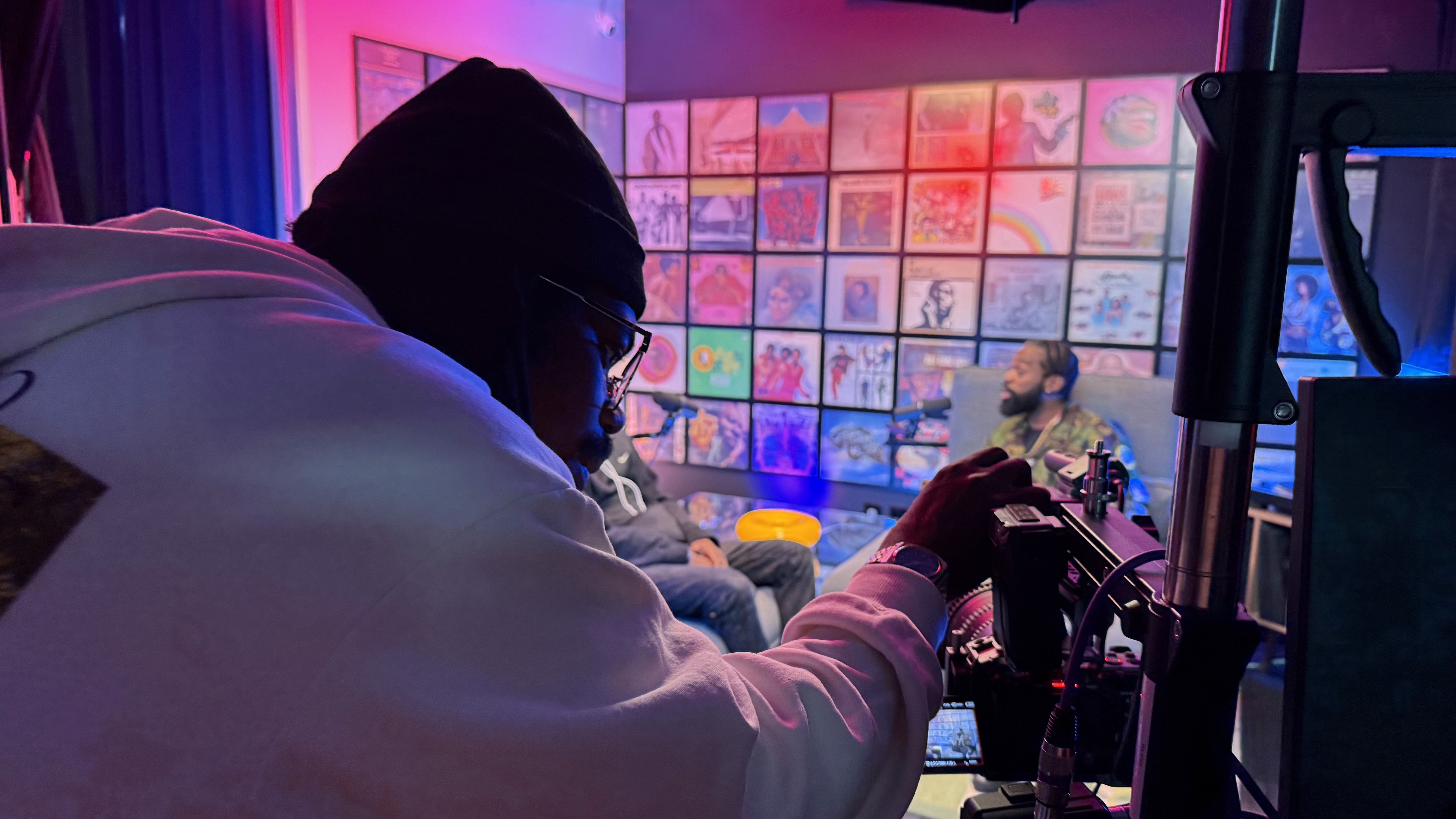
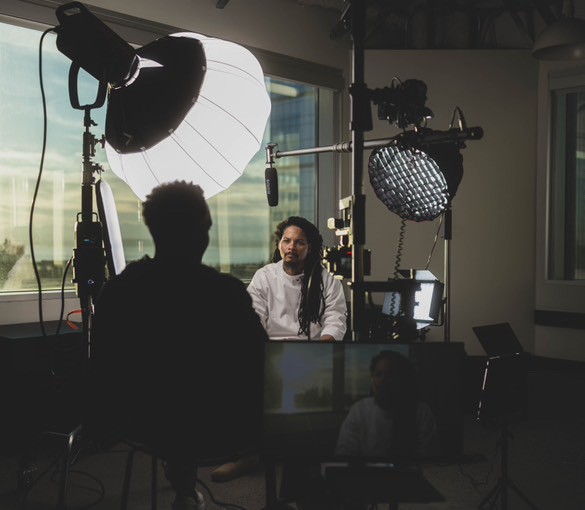
It also helps to picture the room. Knowing whether you want an intimate, cozy feel or a bright, energetic set can sharpen your tone. The Union's two production studios, Blue Pill and Red Pill, each contain a range of versatile sets, including The Cove and The Grid in Blue Pill and the Talk Show set in Red Pill. You don't need to pick one yet, but a studio walkthrough often clarifies what your show wants to feel like.
Common mistakes at the concept stage
Making it for everyone. "Anyone interested in science" is no one. Specific beats broad, especially at the start.
Leading with gear. Buying a microphone before you have a concept is backwards. At The Union, you can book a studio session as a guest without owning anything.
Copying a show you love. Inspiration is great; a clone gives listeners no reason to switch.
Confusing a topic with a promise. Always know what the listener gets.
Skipping the "why you." If you can't explain it, listeners won't feel it.
Waiting for perfect. Your concept will evolve once you record. Aim for clear and solid, then move.
Where an experienced producer saves you time
You can absolutely work through everything in this post on your own. But there's a moment for many creators when a conversation with an experienced producer can save weeks of second-guessing.
The Union's content strategy support covers exactly this stage: pre-production planning and strategy, brand strategy, audience targeting and research, voice, tone and messaging, and producer research. A producer can help you align on premise and audience before a single minute is recorded, which is the foundation everything else in this series builds on. You can see the full range of support on our services page.
Tasha, in our example, books a strategy conversation after her coffee feedback rounds. The producer asks one question she hadn't considered: "What do parents do in the five minutes after the episode ends?" That question shapes her closing segment for the whole first season.
Do this this week
Set aside about three hours across the week:
Day 1 (30 minutes): Write three versions of your one-sentence promise using the template above.
Day 2 (45 minutes): Brainstorm 50 episode ideas. Don't edit, just list.
Day 3 (90 minutes): Run your competitive scan on five shows and sketch a gap map.
Day 4 (15 minutes): Write your "only I" statement.
Day 5 (any time): Say your best promise out loud to three people and write down what they repeat back.
By the end of the week, you should have a clearer promise, proof your idea has depth, and a sense of where your show fits. That's a real concept.
Coming up next
In Part 2, Knowing Your Audience & Niche, we'll help you turn "parents of curious kids" (or your version of it) into a vivid listener profile, and show you how to find where those people already gather. Tasha's about to meet her first real listeners.
Start your story at The Union
You don't need a studio, a microphone or a finished plan to begin. You need an idea and a place that helps you shape it. If you want to talk through your concept, ask about a studio walkthrough, or explore a strategy session, email contact@theunion.io or call 206-551-0964.
Ready to see the space? You can book the studio as a guest by appointment, 9 AM to 5 PM Monday to Friday, no membership required. If you'd like a home base for brainstorming with fellow creators, the CoWorking Hybrid Worker membership ($100/month, $50 sign-up fee, 3-month commitment) adds drop-in coworking and bookable meeting and creative space. Just want to plug into the community first? The CoMmunity membership is $50/month with no sign-up fee and includes VIP event access, the digital library and discounted consultations. When you're ready, apply for membership and our team will schedule a conversation to welcome you in.
Your first episode starts with one clear sentence. Come write it with us.
The full series
This is Part 1 of 24 in Starting a Podcast at The Union (Content Strategy stage). Next: Part 2, Who Is Your Podcast Really For? Finding Your Listener and Niche.