Podcasting
·
Oct 15, 2026
Stuck on a Launch Date? How a Strategy Session at The Union Helps

Arif Gursel
Founder

By the end of Part 5, our example creator, Tasha, had something she had never had before: a content calendar. Twelve episode ideas sat in a spreadsheet, each one built around a real question a kid had asked (Why do cats purr? Can a fish drown? Where does the sun go at night?). She had a working title, a sense of her audience of parents with curious kids, and a release rhythm she thought she could keep. What she did not have was a launch date. Every time she tried to pick one, a new doubt popped up. Is twenty minutes too long? Should she include the kids' voices? Who edits this? (Tasha, remember, is our illustrative creator for this series: a middle school science teacher in Rainier Valley building a show for families.)
This is the moment when a lot of podcasts stall. The plan exists, but it has never been tested by anyone other than its author. The fix is one focused working session where you bring your plan into a room, invite a few sharp people to poke holes in it, and walk out with a date on the calendar. This post shows you how to prepare for that session, how to run it, and how to turn what you learn into a realistic launch timeline.
Why one focused session beats weeks of solo tinkering
When you plan alone, you tend to polish the parts you already understand and avoid the parts that scare you. A strategy session flips that. In 90 minutes to two hours, other people ask the questions you have been dodging, and you are forced to answer them out loud.
A good session does three things:
It confirms the core. Your premise, audience and format either hold up under questioning or they get sharpened on the spot.
It surfaces hidden work. Guest scheduling, permissions, artwork, editing hours and distribution setup all take time. Naming them early keeps them from ambushing you in week three.
It ends with commitments. A date, a recording plan and a short list of owners for each task.
Think of it as a dress rehearsal for your decisions. You are still free to change things later, but you will be changing them from a solid starting point instead of a fog of maybes.
Build your prep packet before you walk in
The quality of the session depends on what you bring. Plan for two to three hours of prep the week before. Aim for a packet someone can skim in five minutes.
A one-page show brief
Write this in plain sentences, one short paragraph each:
Premise: What the show is in one sentence. Tasha's: "Each episode answers one real question a kid asked, so parents can keep the curiosity going at home."
Audience: Who listens, when and why. Be specific about the moment of listening (school drop-off, dishes, a commute).
Format: Solo, co-hosted or interview; target length; segments.
Cadence: Weekly, biweekly or seasonal.
Success at 90 days: One or two measurable goals you control, such as "publish 8 episodes on schedule" or "get feedback from 20 parents."
Your content calendar
Bring the calendar from Part 5, with the first six episodes highlighted. These are the ones the room will scrutinize most.
Three draft outlines
Pick the first three episodes and rough out each one: cold open, intro, main segment, takeaway, outro. Bullet points are fine. Outlines make abstract conversations concrete. It is much easier for someone to say "your takeaway arrives too late" when they can see the structure.
Your open questions list
Write down every decision you have been putting off. No question is too small. Tasha's list included "Do I need a co-host?", "Can I use kids' voices?" and "Is my title searchable?"
A rough budget and time inventory
How many hours per week can you realistically give this? What can you spend per month? Honest numbers here save the most time in the room.
Who should be in the room
You want a small group: three to five people including you. More than that and the session turns into a brainstorm instead of a pressure test.
Someone who represents your listener. For Tasha, a parent of a curious eight-year-old. They will tell you whether the premise actually solves a problem in their week.
Someone with production experience. A producer can spot workload problems instantly: how long an interview episode really takes to book, record and edit, or why your segment structure will be hard to cut.
A creator who is a few steps ahead of you. Someone who has launched a show recently remembers the surprises.
A note-taker. This can be a friend. You need your full attention on the conversation.
This is where The Union's community earns its keep. The space is shared by local entrepreneurs, artists, educators and creators, which means the listener, the peer creator and the person who has wrestled with the same problem may already be working a few tables away. Members are actively making shows here; Jolyn GC, for example, records her podcast Wealth Rituals at The Union. Workshops, community programming and events are natural places to meet people who will happily react to your plan.
For the production voice, consider bringing in The Union's team directly. Content strategy is one of the core services The Union offers, covering pre-production planning, brand strategy, audience targeting and research, voice, tone and messaging, and producer research. Those are exactly the topics a strategy session needs to cover, and having someone who plans shows for a living at the table can save you a lot of trial and error.
Choosing your space
Where you hold the session matters more than you would think. Coffee shops are loud, and home offices invite interruptions. You want a room with a door, a table, a screen or whiteboard, and no reason for anyone to check their phone.
At The Union, you have options depending on your access. The 20th floor has office spaces and meeting rooms available first come, first served for calls and small group meetings, plus The Corner and the Commune with its kitchen and lounges for the informal debrief afterward. The lower level also has meeting areas with a private bathroom and kitchen. If your group is larger or you want to present, the building's 4th-floor conference rooms come with a microphone, podium, whiteboard, conference phone and projector. You can browse all of it on the spaces page.
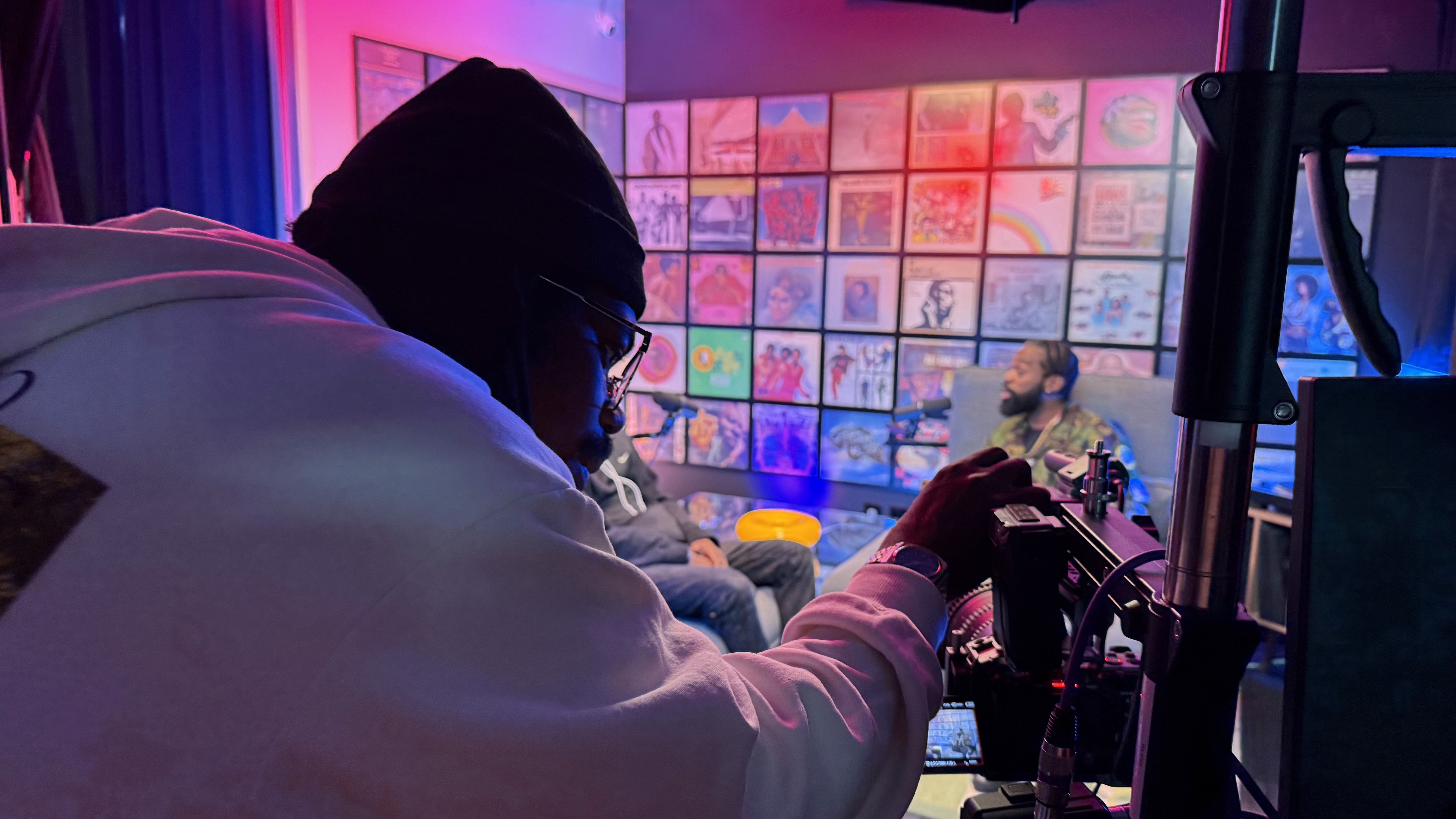
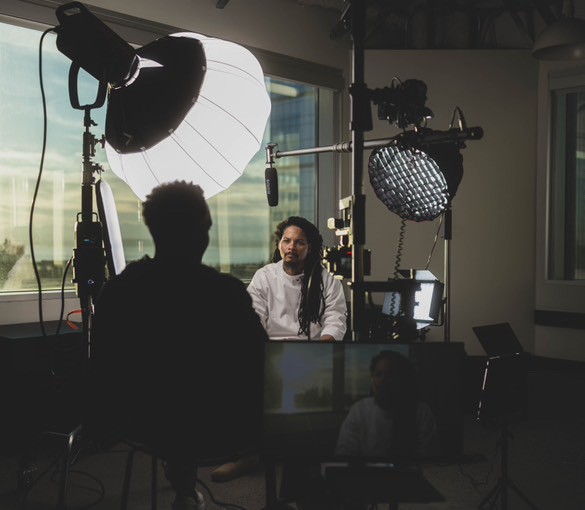
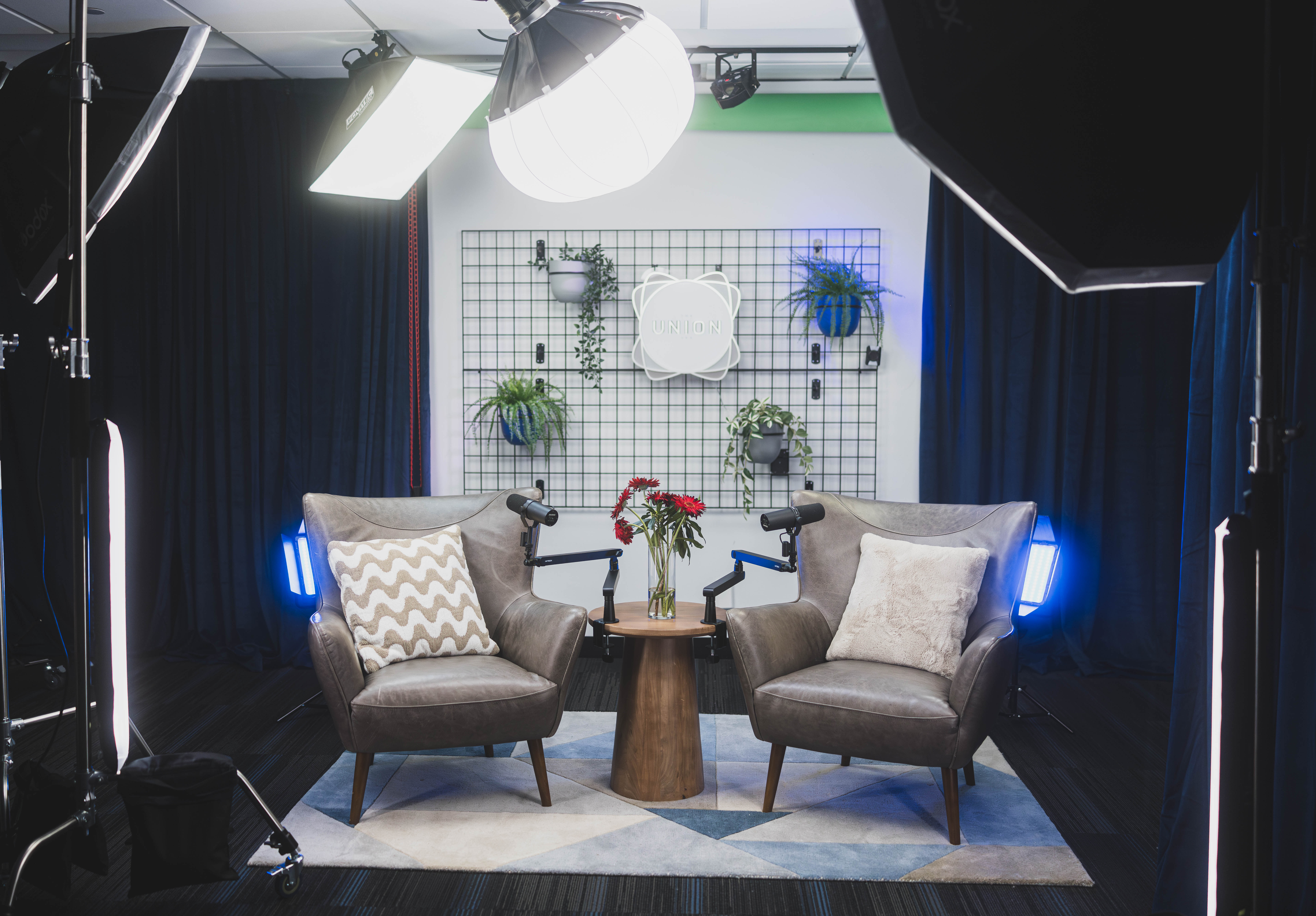
One underrated move: hold part of the session near the studio. Blue Pill is The Union's primary meeting and production space, and seeing a set like The Cove or Blue Room Central in person changes how you think about your show. Tasha had pictured a simple audio show. Standing in a real set, she started asking whether short video clips of her explaining an experiment might reach parents on social media. A studio walkthrough during your session can answer format questions that no amount of whiteboarding will.
Guests can visit 9 AM to 5 PM by appointment, so call or email ahead to arrange a walkthrough. Members on the CoWorking Hybrid Worker tier get bookable meeting and creative space, and CoMmunity members get discounted meeting space and discounted consultations, which suits exactly this kind of session.
The session agenda: a 90-minute checklist
Print this and hand it to everyone. Keep a visible timer.
Set the goal (5 minutes). Say out loud: "By the end, I want a launch date, a recording plan for my first three episodes, and answers to my open questions."
Pitch the show (5 minutes). Read your premise and audience paragraph. Then stop talking.
Cold reactions (10 minutes). Each person shares their gut response: what excites them, what confuses them. No defending yet.
Premise and audience test (15 minutes). Work through the pressure questions in the next section.
Episode walk-through (20 minutes). Go through your three outlines. Ask the listener stand-in where they would tune out.
Workload and production reality (15 minutes). Map hours per episode, who edits, where you record, and what gear you need.
Open questions lightning round (10 minutes). Read your list. Decide, defer with a deadline, or delete each item.
Set the launch date (5 minutes). Use the backward plan below and commit in the room.
Assign next actions (5 minutes). Every task gets an owner and a due date before anyone leaves.
The pressure-test questions
These are the questions that reveal weak spots. Invite your group to ask them bluntly.
Premise
Can you describe an episode in one sentence a stranger would understand?
Why would someone listen to this instead of the other shows in your category? (Search Apple Podcasts and Spotify for your topic beforehand and bring three competitors.)
Does the premise generate at least 30 episode ideas? If you struggle past 12, the concept may be too narrow.
Audience
Where does your listener already hang out, online and offline? That is where your first listeners will come from.
When exactly do they listen, and how long is that window? A 15-minute school drop-off argues for a shorter show.
Is the title searchable? Podcast apps rely heavily on titles and descriptions for search, so plain, descriptive words usually beat clever wordplay.
Format and length
There is no universal ideal episode length. Shows succeed at 10 minutes and at two hours. The right length is the one that fits your audience's listening window and your content. Your session should decide a target range (say, 15 to 20 minutes) so editing has a clear finish line.
Workload
Be honest about editing. A common rule of thumb is that each finished hour of audio takes several hours of editing, and beginners often take longer. The ratio varies widely with how polished you want it and how much you cut. If your time inventory says three hours a week and your plan needs eight, something has to change: a slower cadence, shorter episodes, or handing off post-production. The Union's producers handle editing and post-production, including mixed audio, a clean video cut, short captioned clips, thumbnails, show notes and publishing copy, which is worth pricing out during the session instead of after you burn out.
Permissions and consent
Any show featuring other people needs a consent plan, and shows involving children need extra care. Get written permission from a parent or guardian before using a child's voice, name or likeness, and decide your privacy rules (first names only, for instance). If you collect anything from kids online, such as submitting questions through a website, rules like the federal children's privacy law COPPA may apply to under-13s, so check with someone knowledgeable before you build that form. Guests of any age should sign a simple release.
Distribution basics
Confirm you understand the launch mechanics: you will need a podcast host that generates an RSS feed, square cover art (Apple Podcasts currently asks for 1400 to 3000 pixels per side), and accounts to submit your feed to directories like Apple Podcasts and Spotify. Requirements and review times change, so check each platform's current guidelines. We cover this fully in the Distribution stage.
Turning the session into a launch date
Here is the method: start from the end and work backward, adding buffer at every step. A typical first-time plan looks like this.
Launch day: Many shows release two or three episodes at once (or a trailer plus episode one) so new listeners can binge and decide to subscribe. Pick your number in the session.
One to two weeks before launch: Submit your RSS feed to the directories. Review can take anywhere from hours to several days depending on the platform, so build in slack.
Two to three weeks before launch: Finish editing your launch episodes, write show notes, and finalize artwork.
Three to five weeks before launch: Record your launch episodes plus one or two backups. A banked episode protects your schedule when life happens.
One week before recording: Book the studio, confirm guests, finalize scripts or outlines.
Add it up and most beginners land somewhere between five and eight weeks from strategy session to launch. Faster is possible if you hand off editing; slower is fine if your schedule demands it. What matters is that the date is real and written down.
A practical tip: choose a launch date with meaning for your audience. A parenting show might launch at the start of a school term or right before a long break when families have time together. Make sure it is not a week when you are personally swamped.
Inside Tasha's session
Tasha booked a small meeting room on a weekday afternoon and invited three people: a parent from her school community (illustrative), a fellow creator she had met at a Union event who had launched an interview show the year before (also illustrative), and a producer from The Union team.
The cold reactions were humbling. The parent loved the premise but said 25 minutes was too long for her drive. The peer creator asked how Tasha planned to collect kid questions, and Tasha realized she had no consent process at all. The producer looked at her outlines and noticed that every episode opened with five minutes of banter before the question appeared.
By the end, Tasha had made real decisions:
Target length dropped to 15 to 18 minutes, with the kid's question played in the first 30 seconds.
Kid questions would come in through parents only, with a signed permission form and first names only on air.
She would launch with three episodes, then go biweekly to match her teaching schedule.
She would record solo for season one and test a co-host later.
She would record her launch batch in the studio over one or two sessions, using the teleprompter for her host notes so she could keep her eyes up and her delivery natural.
Launch date: seven weeks out, timed to the start of the next school term.
The producer also suggested a quick visit to a set in the Blue Pill studio to hear what her voice sounded like on a real set before recording day. That one suggestion removed her biggest source of anxiety.
Common mistakes to avoid
Inviting only cheerleaders. Friends who love everything you do cannot help you here. Invite at least one person who will push back.
Defending instead of listening. Write every critique down, even ones you disagree with. Decide later.
Leaving without a date. "Sometime this spring" is a wish. Pick a specific day.
Underestimating editing. This is the most common reason new shows miss their schedule.
Skipping permissions. Re-recording or pulling an episode because a guest or parent objects is painful and avoidable.
Trying to solve everything. Some questions should be deferred with a deadline. Gear choices, for example, are easier once you have heard yourself on a real setup.
Do this this week
Give yourself five short tasks:
Write your one-page show brief (premise, audience, format, cadence, 90-day goal).
Draft outlines for your first three episodes.
List every open question you have been avoiding.
Text or email three people who fit the roles above and propose two possible session times.
Reach out to The Union to ask about a meeting room, a studio walkthrough, or bringing a producer into your session.
Once the session is on the calendar, the rest of your plan suddenly has a deadline, and deadlines are what turn ideas into episodes.
Coming up next
In Part 7, we open the Content Production stage with Recording Gear and Microphones: what actually matters for clean sound, what you can skip, and why you do not need to own a single piece of gear to record your first episode.
Start your story at The Union
You do not need a finished plan, a studio at home or a production background to begin. You need a room, a few honest voices and people who have done this before. The Union has been an on-ramp for Seattle's educators, entrepreneurs and artists since 2018, and its team can help you pressure-test your show, walk you through the studio and map a launch you can keep.
Reach out at contact@theunion.io or call 206-551-0964 to talk through a strategy session or a studio tour. If you are ready to try the space, you can book the studio as a guest by appointment. If you want limited access to The Union, VIP event access, discounted meeting space and discounted consultations, the CoMmunity membership is $50 per month with no sign-up fee, and when you are ready to record regularly, the CoCreate Podcast membership is $300 per month (with a $100 sign-up fee, a two-month commitment and currently about a one-month waitlist). Whenever you are ready, apply for membership and bring your idea into the room.
The full series
This is Part 6 of 24 in Starting a Podcast at The Union (Content Strategy stage). Previous: Part 5, Never Stare at a Blank Week Again With a Simple Content Calendar. Next: Part 7, A Beginner Guide to Podcast Microphones and Recording Gear.