Podcasting
·
Oct 15, 2026
Can Your Podcast Pay for Itself? Sponsorships and Monetization 101

Arif Gursel
Founder

Twenty-three parts ago, you had an idea and maybe a voice memo. Since then you have shaped a concept, planned episodes, stepped into a studio, edited your first cuts, published, promoted, and learned to read your analytics. This final part answers the question that sits quietly behind a lot of podcasting dreams: can this show pay for itself, and maybe pay you too?
The honest answer is yes, often, though rarely the way beginners expect. Most independent shows earn their first real money from a mix of small, well-matched sources. In this post you will learn how to identify what your show is actually worth, which revenue paths fit a young show, how to build a media kit, how to pitch and price a sponsorship, and how to stay trustworthy while you do it.
Where Our Example Creator, Tasha, Is Now
If you are just joining, Tasha is our illustrative creator for this series: a middle school science teacher in Rainier Valley who hosts a podcast for parents of curious kids. Every episode answers one real question a kid asked, like "Why does the moon follow our car?" or "Can a fish get thirsty?"
By this point in her journey, Tasha has published about 20 episodes. In Part 23 she learned to read her numbers, and here is what they told her (these figures are illustrative):
Roughly 600 downloads per episode within 30 days of release.
A newsletter list of about 900 parents, most of whom found the show through school events and word of mouth.
Strong completion rates on episodes under 25 minutes.
Most listeners are in the Seattle area, with a cluster in South Seattle.
Tasha's first instinct was discouragement. She had read that big shows earn money through ad networks paid per thousand downloads, and 600 sounded tiny. Then she sat down with the numbers again and realized something important: her audience is small, local, specific, and deeply engaged. That combination is exactly what certain sponsors and partners want.
Know What You Are Actually Selling
Before you chase money, get clear on your asset. A podcast sells three things: attention, trust, and access to a specific community. Download counts measure only the first.
The CPM math, and why it can mislead small shows
Much of the podcast ad industry prices spots by CPM (cost per mille), meaning the price per 1,000 downloads. Commonly cited industry ranges have hovered around $15 to $30 CPM for a 30-second spot and roughly $20 to $50 for a 60-second host-read midroll. These ranges vary a lot by genre, audience, ad position, and market conditions, and they shift year to year, so treat them as a rough reference only.
Run Tasha's numbers: 600 downloads at a $25 CPM is $15 per spot. That will barely cover her coffee. If you only think in CPM, a young show looks worthless to advertisers.
Value-based thinking
Here is the shift: a local business does not care about national averages. A neighborhood science camp, a kids' bookstore, or a family-focused credit union cares about reaching the right parents in the right ZIP codes, from a voice those parents already trust. A teacher recommending a summer science camp to 600 local parents is worth far more than $15 to that camp. That is why small shows usually do better with flat-fee sponsorships priced on fit and trust, with downloads as one supporting number.
The Main Revenue Paths for an Independent Show
Think of these as a menu. You do not need all of them. Most shows start with one or two that fit their audience and add more over time.
1. Direct sponsorships
A business pays you to mention them on your show, usually as a host-read ad. Host-read ads tend to perform well because listeners hear them in a familiar voice. Common formats:
Pre-roll (about 15 to 30 seconds at the top).
Mid-roll (60 seconds or more in the middle, typically the most valuable spot).
Post-roll (at the end, usually the least valuable).
Presenting or season sponsor (one partner backs a whole season or series, often with show notes, newsletter, and social mentions bundled in).
For a show like Tasha's, a season sponsorship from one well-matched local partner is often easier to land and manage than a string of one-off ads.
2. Listener support and memberships
Some listeners will pay to support a show they love. Options include Patreon, Apple Podcasts Subscriptions, Spotify's paid features for eligible creators, Substack, Buy Me a Coffee, and similar tools. Each takes a cut through platform and payment processing fees, and those terms differ by platform and have changed over time, so check current pricing before you choose. Apple, for example, requires creators to join its paid Podcasters Program (listed at $19.99 per year at the time of writing) before offering subscriptions.
The usual offer is bonus content, early access, ad-free episodes, or community perks. Tasha's version: a monthly "Kitchen Lab" bonus episode with a printable experiment sheet for families.
3. Platform and ad-network programs
Hosting platforms and networks can insert ads programmatically and pay you a revenue share. If you publish video, YouTube's Partner Program shares ad revenue once you meet eligibility thresholds (historically 1,000 subscribers plus either 4,000 public watch hours in 12 months or a set number of Shorts views, with a lower entry tier offering some features earlier). These thresholds change, so verify them on YouTube's current help pages. Programmatic income is usually modest for small shows, but it is passive and grows with your audience.
4. Partnerships, services, and live events
This is where many independent creators quietly earn the most. Your show is proof of expertise and a magnet for opportunity:
Paid workshops (Tasha could run a "How to answer your kid's big questions" session for parent groups).
Live tapings with tickets or a sponsor underwriting the event.
Speaking and consulting that the show makes possible.
Institutional partnerships with libraries, museums, schools, or nonprofits, sometimes funded through grants.
Products like activity guides or curriculum kits.
The Union's own model is a useful reminder here. It is a nonprofit program of PACE (Pan African Center for Empowerment), and revenue from bookings funds residency, fellowship, and education programs. Mission and money can support each other when the fit is right.
Where The Union Fits Into Your Revenue Plan
Sponsors are people, and most early sponsorships come from relationships. That is one of the strongest arguments for building your show inside a creative community.
The Union is a coworking and creator space in downtown Seattle shared by local entrepreneurs, artists, educators, and creators, rooted in cooperative economics. The member and partner network can open doors: the person working near you in The Corner or chatting in the Commune kitchen on the 20th floor might run exactly the kind of business that wants to reach your audience, or know someone who does. Workshops, community programming, and VIP access to events The Union produces and presents put you in the same rooms as potential partners.
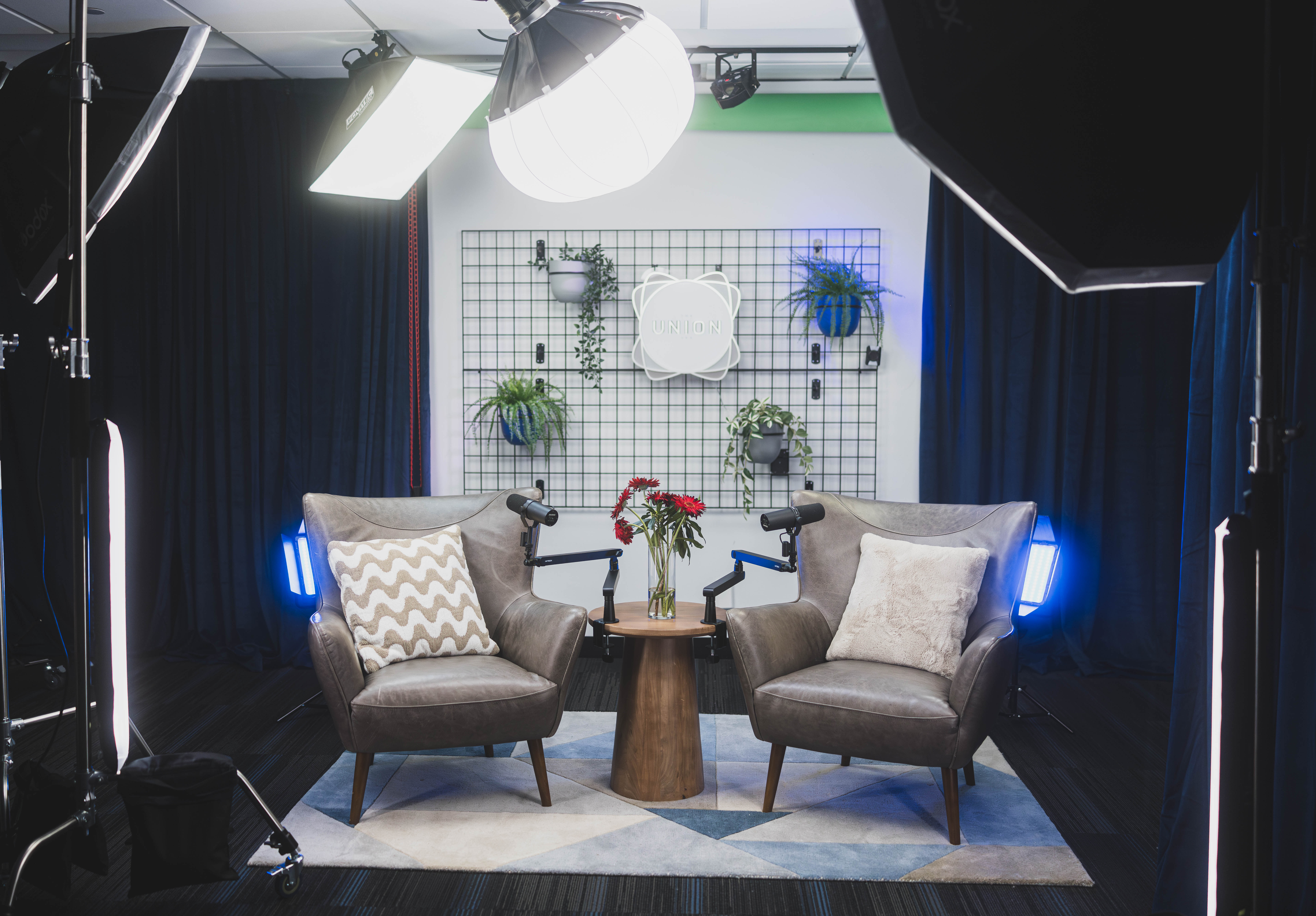
A credible home base also matters when a sponsor says yes. Recording consistently in a purpose-built studio like the Blue Pill or Red Pill signals that your show is serious and will deliver on schedule. Jolyn GC, a real Union member, records her podcast Wealth Rituals at The Union, and that kind of steady, professional home is what sponsors like to see behind a show.
The production side supports monetization directly too. Among The Union's post-production deliverables are sponsor-ready ad markers when partners are in scope, along with short captioned clips, thumbnails, pull-quotes, and show notes. Those clips and quotes double as proof of value you can share with sponsors. You can see the full range of strategy, production, and delivery support on the services page.
Build a Media Kit That Sells Your Story
A media kit is a one- or two-page document that tells potential sponsors who you are, who listens, and what partnering looks like. Keep it simple, honest, and current.
Show summary: one sentence that a busy business owner understands. Tasha's: "A weekly podcast where a Seattle science teacher answers real questions from curious kids, for the parents raising them."
Host bio: two or three lines on why you are trustworthy.
Audience snapshot: who listens, where, and how engaged (downloads per episode at 30 days, completion rate, newsletter size, top regions).
Proof of trust: a few listener comments or reviews, used with permission.
Visuals: cover art, a professional host photo, and maybe a still from a video episode.
Sponsorship options: two or three packages with clear deliverables.
Past partners or collaborations (once you have them).
Contact and next steps: email and a simple call to action.
Use the same analytics habits from Part 23. Report the same metric consistently (for example, 30-day downloads) and never round up in ways you could not defend. Trust is your product.
If you are unsure how to frame your audience, this is a good moment for a strategy session. The Union's content strategy services include brand strategy, audience targeting and research, and voice, tone and messaging, which is exactly the language a media kit needs.
How to Pitch and Price a Local Sponsor
Find the right fit
List 15 to 20 businesses or organizations whose customers look like your listeners. Tasha's list included STEM summer camps, tutoring centers, family-friendly cafes, kids' bookstores, a nature center, and a family-focused credit union. Then cut any that you would not genuinely recommend to a friend. Fit is everything.
Write a short, specific pitch
Keep it under 150 words: who you are, who listens, why their customers overlap, one concrete package, and a simple ask for a 15-minute call. Attach your media kit. Personalize every message.
Price with a simple package
For a young show, build packages around deliverables and duration. An illustrative example of how Tasha structured hers:
Episode sponsor: one 60-second host-read mid-roll, a show notes link, and one newsletter mention.
Season sponsor: a host-read in every episode for 8 to 10 episodes, a "presented by" credit, newsletter mentions, and two short social clips.
Event partner: sponsor credit at a live taping or workshop.
There is no universal rate card for flat fees. Research what local publications or newsletters with similar reach charge, factor in your time, and start with a price you can stand behind. Offering a short trial (two or three episodes) at a fair rate lets both sides test the fit and gives you results to show at renewal.
Put it in writing
Even with a friendly neighbor, use a short written agreement covering deliverables, dates, payment terms, approval of ad copy, how long ads stay live in the back catalog, and how either side can end the deal. If anything feels complex, get qualified legal or tax advice.
Disclose, always
In the United States, the FTC expects clear disclosure when you are paid or receive free products in exchange for a mention. Say it plainly in the episode ("This episode is sponsored by...") and in show notes. Platforms like YouTube also have their own paid promotion disclosure tools. Your listeners will forgive ads. They will not forgive feeling tricked.
Common Monetization Mistakes
Waiting for big numbers. Local, engaged audiences can attract sponsors long before national networks notice you.
Taking every offer. One poorly matched sponsor can cost you listener trust that took a year to earn. Tasha declined a sugary snack brand because it clashed with her show's values.
Reading ads you do not believe. Host-reads work because they sound real. Try the product or service first when you can.
Skipping the report. After a campaign, send the sponsor a short summary of downloads, clicks, codes used, and listener feedback. This is how renewals happen.
Relying on one source. A mix of sponsorships, listener support, and partnerships is sturdier than any single stream.
Ignoring the production lift. Ad markers, clips, and newsletter mentions take time. Build them into your workflow or get help with them.
Do This This Week
Give yourself about two hours across the week:
Pull your last 90 days of analytics and write a three-line audience snapshot.
Draft a one-page media kit using the eight-part checklist above.
List 15 potential sponsors or partners, then circle the five best fits.
Write one 60-second host-read ad for your top pick, as if they had already said yes. Record it and listen back.
Send one personalized pitch.
If you want a second set of eyes on your media kit or package pricing, an experienced producer can often spot quickly what would take you weeks of trial and error. Community members get discounted consultations, which makes that conversation an easy first step.
Looking Back Across All Four Stages
Tasha's journey started with a classroom full of questions and a hunch that parents wanted help answering them. Across 24 parts, here is the path she followed, and the one available to you:
Content Strategy: she shaped a clear concept, named her audience, and planned episodes around real kid questions. Producers can help align premise and audience before you ever press record.
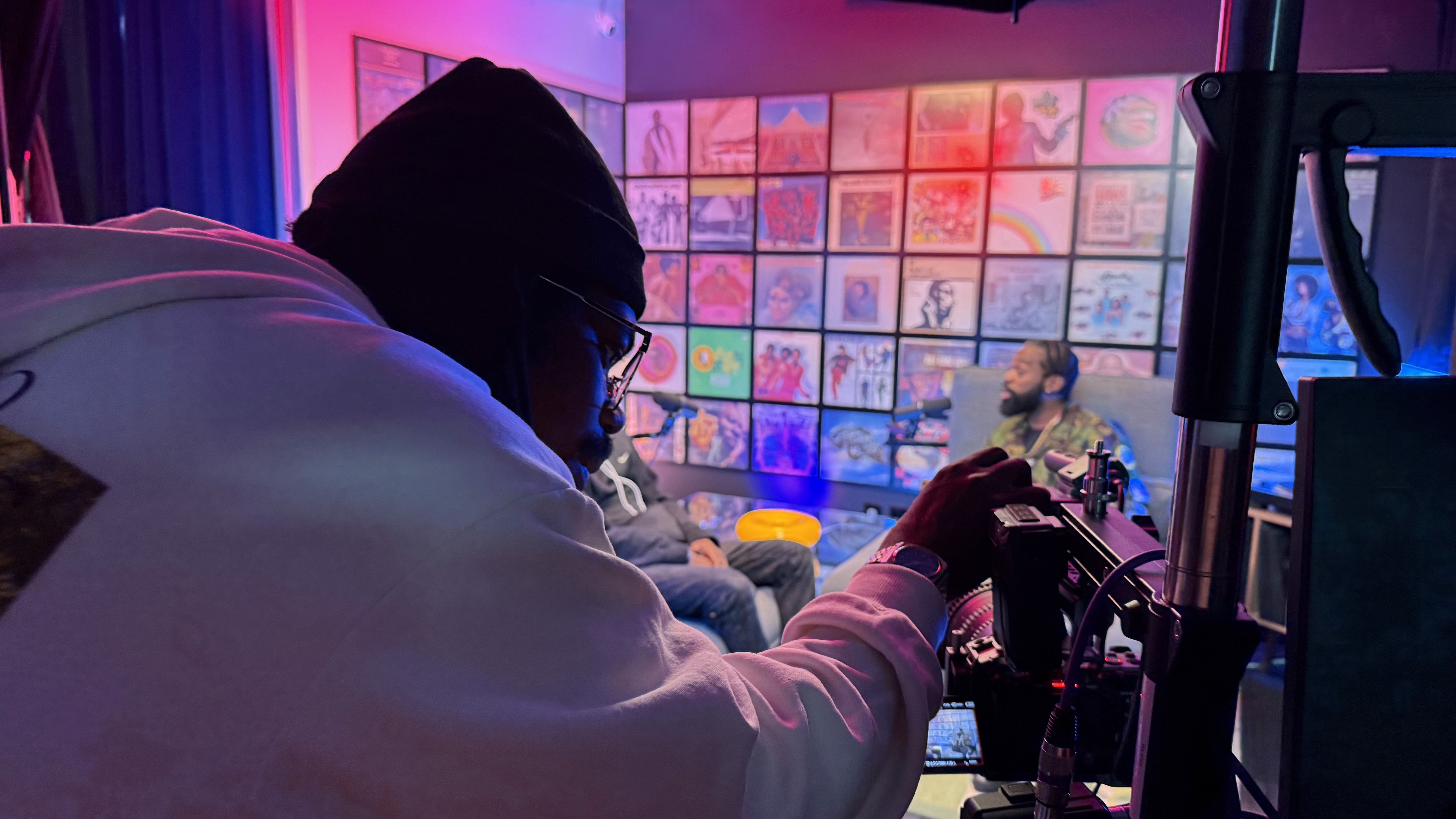
Production: she learned that you do not need to own gear to start. Sets like The Cove, The Grid, Talk Show, and QT's Corner across the Blue Pill and Red Pill studios offer a creator like her a place to record, with a teleprompter screen for host notes and hands-on support when needed.
Post-Production: she edited, mixed, and cut clips, and a creator like her can use the pre/post-production room and cloud sync that keeps a remote editor in the loop.
Distribution: she published, promoted, read her analytics, and finally turned trust into revenue.
Through every stage, the lesson was the same: storytelling gets easier when you have a home base and a community behind you. That is what The Union has aimed to be since it opened its doors on Juneteenth 2018: the longest-running modern coworking and creator space in the Pacific Northwest, built to center and uplift Black culture, creativity and storytelling, and a piece of infrastructure for Seattle's creative economy where educators, entrepreneurs, artists, and creators can step onto the on-ramp together.
Coming up next
This is the final part of the series, so your next step is yours to choose: start again at Part 1 to shape your concept with fresh eyes, or come record your very first episode at The Union and begin your own story.
Start your story at The Union
Whether your show is an idea or already earning, the team at The Union can help you take the next step. Email contact@theunion.io or call 206-551-0964 to ask about a studio walkthrough or a strategy session. Ready to try a session? Guests can book the studio by appointment, from 9 AM to 5 PM, without a membership.
If you are ready for a steady creative home, apply for membership. The CoCreate Podcast membership is $300 per month with a $100 sign-up fee and a two-month commitment, and it includes the media lab for DIY and full-service productions plus pre-paid parking for you and your guests. CoCreate memberships currently have a waitlist of about one month, so applying early helps. Prefer to start smaller? The CoMmunity membership is $50 per month with no sign-up fee, and it includes VIP event access and discounted consultations. You will find us at 1200 2nd Ave in downtown Seattle, close to Third Avenue buses and light rail. Your listeners are out there. Come meet the community that can help you reach them.
The full series
This is Part 24 of 24 in Starting a Podcast at The Union (Distribution stage). Previous: Part 23, Reading Podcast Analytics: What the Numbers Actually Tell You. Start again from Part 1.