Podcasting
·
Oct 15, 2026
How to Book Great Podcast Guests and Make Them Glad They Came

Arif Gursel
Founder

Last time, you dialed in your studio setup: mic placement, levels, lighting, and the small habits that make a session sound professional. Now comes the part that turns a good-sounding show into a great one: the people you invite to the microphone. A thoughtful guest can bring expertise you don't have, a voice your audience trusts, and a story nobody else can tell. A poorly prepared booking, on the other hand, can burn an afternoon, a relationship, and an episode.
This part of the series walks you through guest booking from first idea to final thank-you note: where to find guests, how to write outreach that gets a yes, how to schedule without endless email chains, what goes in a prep doc, and why release forms matter more than most beginners think. Along the way, you'll see how The Union's community, events, and spaces make each step easier.
Where Tasha Is Right Now
If you're just joining the series, meet Tasha, our illustrative creator. She's a middle school science teacher in Rainier Valley building a podcast for parents of curious kids. Each episode answers one real question a kid asked, like "Why do octopuses have three hearts?" or "Where does the rain go after it hits the street?"
Over the last few parts, Tasha recorded a pilot episode solo in The Cove, one of the sets in the Blue Pill studio, and she's comfortable with her setup. But she's noticed something. When she answers a question about ocean animals herself, the episode is fine. When she imagines a marine biologist answering it, with real stories from the field, the episode comes alive.
So Tasha's plan for her first season is a mix: some solo episodes, some with expert guests, and a few that include the kid who asked the question (with a parent's permission, which we'll cover). She has a list of dream guests and zero idea how to reach them. That's exactly where most new hosts start.
Decide Who You Actually Need
Before you send a single email, get clear on what role guests play in your show. Guests are a format decision. Some shows are built entirely around interviews; others use guests occasionally to add depth.
Start by sorting potential guests into three groups:
Experts: people with specialized knowledge your listeners can't easily get elsewhere. For Tasha, that's scientists, naturalists, engineers, and museum educators.
Storytellers: people with lived experience that illustrates your topic. A parent who turned a backyard into a pollinator garden with their kids, for example.
Community voices: people your audience recognizes or relates to. For Tasha, that might include other teachers, librarians, or the kids themselves.
Then build a guest map. Open a spreadsheet with these columns: name, role or expertise, episode idea, how you know them (or how you could reach them), contact info, status, and notes. Aim for 20 to 30 names before you reach out to anyone. That number sounds high, but response rates on cold outreach are often low, and they vary a lot depending on your connection to the person and how busy they are. A long list keeps you from stalling when the first few people say no or never answer.
Tasha's map started with 24 names. Six were people she already knew: a former student's parent who works at a local aquarium, a colleague who taught environmental science for years. Eighteen were cold contacts she found through university department pages and local nature organizations.
Let Community and Events Bring Guests to You
The easiest guest to book is someone who already knows you. That's why your network matters so much in the early days, and it's one of the quiet advantages of producing your show inside a creative community instead of a spare bedroom.
The Union is a community, coworking, and creative media production space in downtown Seattle, purpose-built to support educators, entrepreneurs, artists, and creatives. On any given day, the people working on the 20th floor, relaxing in the Commune's lounges, or recording in the studios are exactly the kinds of people who make great guests: founders with origin stories, artists with process insights, educators with classroom experience.
Here's how that community becomes a guest pipeline:
Workshops, webinars, and community programming. The Union hosts education and community events. Attending them puts you in a room with speakers and participants who are already comfortable sharing what they know.
VIP event access. Every membership tier, starting with CoMmunity, includes VIP access to events The Union produces and presents, in person and online. Events are one of the most natural places to meet a future guest, because you've already heard them speak.
Everyday coworking. Shared space means shared conversations. A chat in the game room or the Commune can turn into "Would you ever come on my show?"
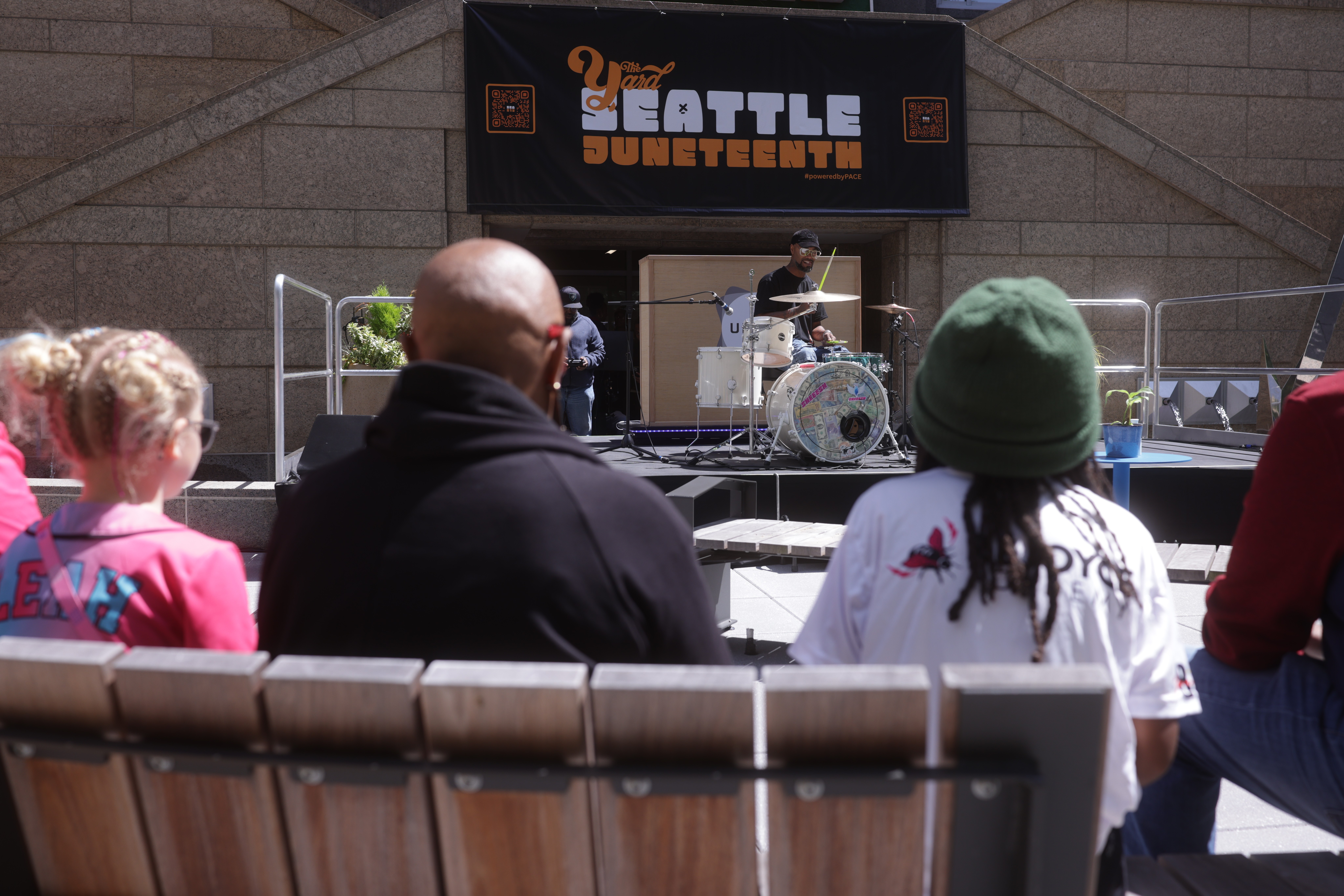
There's a long tradition behind this. Since opening its doors on Juneteenth 2018, The Union has hosted artist residencies, art walks, salons, and talk-backs, and members were already making podcasts there by 2020. It's a place where creative people meet each other on purpose.
Tasha found her first non-scientist guest this way. At a community event, she met a member who runs a hands-on maker program for kids (an illustrative example). Ten minutes of conversation later, she had an episode idea: "Why do some paper airplanes fly farther than others?"
Write Outreach That Gets a Yes
Busy people decide in seconds whether to read your email. Your job is to make saying yes feel easy, specific, and worthwhile.
The five parts of a strong pitch
A clear subject line. "Podcast invite: kids' science question about octopus hearts" beats "Quick question."
Who you are, in one sentence. Name, show, and audience.
Why them, specifically. Mention their work, a paper, a talk, or a post. Generic flattery reads as mass email.
The ask, with details. Topic, approximate length, in-person or remote, and a window of dates.
What's in it for them. An audience of engaged parents, a shareable clip, a chance to inspire kids.
Keep it under about 150 words. Here's the pitch Tasha sent to a marine biologist (an illustrative example):
Subject: Podcast invite: a 9-year-old wants to know why octopuses have three hearts
Hi Dr. Rivera, I'm Tasha, a middle school science teacher in Rainier Valley. I host a podcast for parents of curious kids, where every episode answers one real question a child asked. A student's younger brother asked why octopuses have three hearts, and your outreach work on cephalopods made you the first person I thought of. Would you join me for a 30 to 40 minute conversation? We can record in person at a downtown Seattle studio or remotely, any weekday in the next three to four weeks. I'll send questions ahead and share a short clip you can post. Thank you for considering it! Tasha
Follow up, politely
Silence usually means busy, not no. Send one follow-up about five to seven business days later, a short reply on the same thread. If you hear nothing after a second follow-up a week or two after that, move on and mark them as "revisit next season."
Common outreach mistakes
Writing a long, life-story email before making the ask.
Asking "Can I pick your brain?" with no topic, length, or format.
Sending the same message to everyone with only the name changed.
Pitching your biggest dream guest first, before you have a few episodes to point to.
Forgetting to say whether the recording is audio only or video. Many guests want to know if they'll be on camera.
If you're unsure how to position your show to guests, this is a good moment to talk with a producer. The Union's content strategy services include audience research, messaging, and producer research, which can sharpen both your pitch and your guest list. You can see the full range on the services page.
Schedule Without the Email Ping-Pong
Once a guest says yes, move fast. Enthusiasm fades, and calendars fill up.
Scheduling tools such as Calendly or the booking features in Google Calendar or Microsoft Outlook let guests pick from times you've already blocked. Features and free-tier limits change over time, so check what each tool currently offers. Whatever you use, follow a few rules:
Offer three to five specific slots if you're scheduling by email. Open-ended "When works for you?" questions create long threads.
Book more time than you need. For a 40-minute episode, block 75 to 90 minutes: arrival, mic check, small talk, recording, and a buffer.
Confirm time zones for remote guests, in writing.
Send a calendar invite immediately with the address or remote link, your phone number, and the prep doc attached.
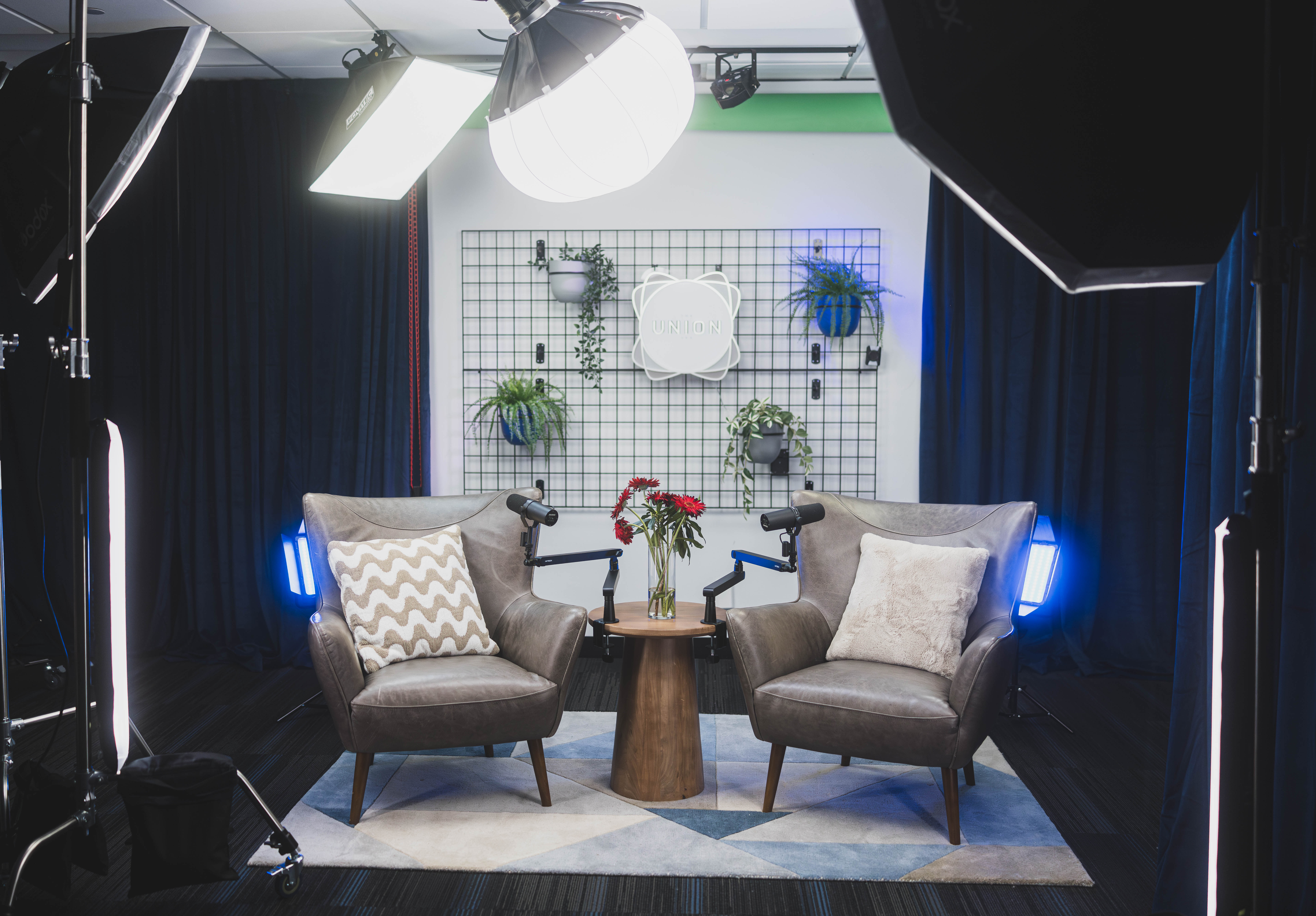
Before you offer slots, check studio availability. At The Union, guests can book the studio between 9 AM and 5 PM on weekdays by appointment, and members have 24/7 access Monday to Friday, booking space through the member portal. If your guest can only record in the evening, that's a practical reason to consider membership. Lock the studio first, then offer those times to your guest, so you never confirm a recording you can't host.
Build a Guest Prep Doc
A prep doc is a one to two page guide you send once the date is confirmed. It reduces nerves, prevents surprises, and signals that you're a professional worth showing up for.
What to include
Show overview: the premise and audience in two or three sentences.
Episode focus: the question you're answering and the angle you'll take.
Five to eight question themes: enough to prepare, not a word-for-word script.
Format details: length, audio or video, and whether you edit afterward.
Logistics: address, arrival time, transit and parking info, who to call on the day.
What to wear if video is involved: solid colors usually work better on camera than tight patterns.
Bio and links request: ask for a short bio, how they want their name and title shown, and links for show notes.
Release form: attached, with a request to sign before the session.
Tasha's prep doc includes a line she calls "the kid test": Imagine explaining your answer to a curious 10-year-old and their parent at the same time. It helps experts calibrate their language before they arrive.
On recording day, your notes can live on the teleprompter screen available in the studio for host notes, so you're looking up at your guest instead of down at paper.
Release Forms and Permissions
A guest release is a short written agreement giving you permission to record, edit, and publish someone's voice, likeness, and words. Many new hosts skip it because the guest is a friend. That's a mistake. Releases protect both of you, and many platforms, sponsors, and distributors expect you to have rights to what you publish.
A basic release typically covers:
Permission to record audio and, if applicable, video.
Permission to edit, and to use excerpts in clips, trailers, and promotion.
Where the content may appear: podcast platforms, video platforms, social media, your website.
How long the permission lasts (often indefinitely).
Whether the guest is paid (usually not, for most independent shows).
Signature, printed name, and date.
E-signature tools make collecting signatures easy. Store signed releases in a dedicated folder named by episode.
When guests are minors
This matters for Tasha. When a child appears on the show, a parent or legal guardian must sign the release. Tasha also follows a few extra practices: she uses first names only, never mentions schools or neighborhoods tied to a child, has the parent present during recording, and gives parents a chance to hear the segment before release.
Release requirements vary by situation and jurisdiction, so treat this as general guidance, not legal advice. Have an attorney review your template once, especially if you work with minors, sponsors, or recordings in public settings.
Day-Of Logistics: Make Hosting Effortless
A guest's experience begins long before the mic turns on. If they get lost, can't park, or wait awkwardly in a hallway, that energy shows up in your recording.
The Union is at 1200 2nd Ave in downtown Seattle, in the plaza of the 1201 Third building between University and Seneca on Second Ave. It's close to Metro buses on Third Avenue and Sound Transit light rail, which makes it easy to include clear transit directions in your prep doc. The CoCreate Podcast membership also includes pre-paid parking for host and guests, which removes one of the most common day-of headaches.
Once your guest arrives, you have options for making them comfortable. The 20th floor has meeting rooms available first come, first served for calls and small group meetings, plus the Commune with its kitchen and lounges. There are also lower-level meeting areas with a private bathroom and kitchen. Any of these can serve as a quiet place to review topics or let a guest settle in before heading into the studio. Browse the spaces page to picture how you might use them.
For remote guests, The Union's dedicated fiber internet supports smooth connections, and remote recording platforms such as Riverside or Zencastr can capture separate local tracks for higher quality (features and pricing change, so compare current plans). If you work with The Union's producers, they handle much of this for you: they align on premise and audience, prep a run-of-show, confirm guest logistics, test remote links, and set the room before the session starts.
Your guest logistics checklist
Guest confirmed in writing with date, time, and format.
Studio or set booked and confirmed for that slot, with buffer time.
Calendar invite sent with address or remote link and your phone number.
Prep doc sent at least five to seven days ahead.
Release form signed and filed (guardian signature for any minor).
Bio, name spelling, pronunciation, and links collected.
Transit and parking details shared.
Remote link tested with the guest a day or two before, if applicable.
Reminder sent 24 hours ahead.
Water, a quiet waiting spot, and your host notes ready on the day.
After the Recording: Keep the Relationship Warm
Booking doesn't end when you stop recording. Within 24 hours, send a thank-you email. When the episode is ready, send the release date, the link, and ready-to-share assets: a short clip, a pull-quote graphic, and suggested caption text.
Guests who share their episode extend your reach to their audience, and the easier you make it, the more likely they are to post. The Union's post-production work includes short captioned clips, thumbnails, pull-quotes, and show notes, which means you can hand guests polished assets without building them all yourself.
Finally, ask every guest one question: "Who else should I talk to?" Referrals from a happy guest convert far better than cold outreach. Tasha's marine biologist introduced her to a colleague who studies tide pools, and that became episode six.
Do This This Week
Build your guest map: list 20 names, split between people you know and people you'd cold-pitch.
Draft one pitch using the five-part structure, under 150 words.
Create a prep doc template you can reuse for every guest.
Draft a release form and schedule a quick review with an attorney if you plan to feature minors.
Attend one community event and introduce yourself to at least two people as a podcaster.
If any of this feels like a lot, remember that you don't need to figure it out alone. A short conversation with a producer can help you prioritize your guest list and avoid scheduling mistakes before they cost you a session.
Coming up next
Your guest is booked, prepped, and walking in the door. In Part 11, Running a Recording Session, you'll learn how to open strong, manage pacing, handle surprises, and capture clean takes from the first word to the last.
Start your story at The Union
Great guests deserve a great place to talk, and you deserve a team that makes hosting them feel easy. Whether you want to record a single guest episode or build a full season, The Union is here to help you start, even if you don't own any gear yet.
Reach out at contact@theunion.io or call 206-551-0964 to ask about a studio walkthrough or a strategy session. You can book the studio as a guest by appointment, or apply for membership. The CoCreate Podcast membership is $300 per month with a $100 sign-up fee and a two-month commitment, and includes the media lab for DIY and full-service productions plus pre-paid parking for host and guests. CoCreate memberships currently have a waitlist of about one month, so applying now means you'll be ready when your guests are. If you'd like to start with community and events first, the CoMmunity membership is $50 per month with no sign-up fee and includes VIP event access. Your next great guest might be someone you meet here.
The full series
This is Part 10 of 24 in Starting a Podcast at The Union (Content Production stage). Previous: Part 9, A Repeatable Studio Setup So You Can Press Record Faster. Next: Part 11, Your First Recording Session, Step by Step.