Podcasting
·
Oct 15, 2026
Interview, Solo, or Story? Choosing Your Podcast Format and Schedule

Arif Gursel
Founder

Our example creator, Tasha, has a question taped above her desk. One of her seventh graders asked it during a unit on weather: "If clouds are made of water, why don't they fall down?" It's the kind of question that makes a whole classroom go quiet, and it's exactly the kind of question her podcast is built around. In Part 1, she landed on a working concept: a show for parents of curious kids, where each episode answers one real question a kid asked. In Part 2, she got specific about who she's talking to: busy Rainier Valley parents (and parents like them anywhere) who want to say "great question" and then actually have an answer.
Now she's facing the decision that quietly determines whether a podcast survives its first year: what shape will each episode take, and how often will a new one come out? (Tasha is an illustrative example who follows us through this series. Her choices are meant to show you how the thinking works, so you can apply it to your own show.)
This post breaks down the common podcast formats, what each one really costs in time and coordination, how to choose an episode length, and how to set a release rhythm you can keep. Along the way, you'll see how bookable studio time at The Union can turn a cadence on paper into a cadence you actually hit.
Why Format and Cadence Are Really One Decision
Most beginners treat these as two separate questions. They're tangled together. A solo show recorded from a single outline is quick to produce, so a weekly schedule is realistic. An interview show depends on other people's calendars, which slows you down. A narrative show with scripting, multiple voices and sound design can take weeks per episode, so it often works best in seasons.
That means the right question is: what format can I produce well, at what rhythm, with the time I truly have? Your answer should match three things:
Your goal. Building authority? Growing a business? Serving a community? Each points toward different formats.
Your audience's habits. Parents listening during a 25-minute commute have different needs than hobbyists who binge on weekends.
Your real calendar. Count the hours you have, then plan for fewer.
Listeners forgive a lot. A show that disappears without warning is the hardest thing for them to forgive. A large share of podcasts in public directories never make it past their first handful of episodes, and an unsustainable schedule is one of the most common reasons. Choosing well now is how you avoid that.
The Main Podcast Formats and What Each Really Costs
Solo
One host, one microphone, one point of view. Solo shows are the simplest to schedule because you only need yourself. They work well for teaching, commentary and expertise-driven shows.
Strengths: full creative control, easy scheduling, builds a strong personal connection with listeners.
Costs: you carry all the energy. Without someone to bounce off, solo episodes need tighter outlines to avoid rambling. Many first-time solo hosts find 15 minutes of good talking takes 30 minutes of recording.
Prep time: usually the highest per minute of finished audio, since you're the only content source.
Co-hosted
Two (sometimes three) regular hosts with natural chemistry. Think of it as a recurring conversation listeners get to sit in on.
Strengths: conversation feels lively, prep is shared, one host can ask the "dumb question" the audience is thinking.
Costs: two calendars to align, and you need to agree on decision-making, money and what happens if one person steps away. Write that down early.
Interview
A host plus a new guest each episode. This is one of the most popular formats because guests bring fresh expertise and often share the episode with their own audiences.
Strengths: variety, built-in content, networking, and cross-promotion.
Costs: booking and rescheduling guests takes real time. Audio quality varies when guests join remotely. You also need solid research and questions for every person.
Panel or Roundtable
Three or more voices discussing a topic, often with a moderator. Great for debate, community perspectives or industry roundups.
Strengths: rich, multi-angle conversations.
Costs: the hardest to record cleanly (more microphones, more crosstalk) and the hardest to edit. Moderating well is a skill.
Narrative or Documentary
Scripted, story-driven episodes built from narration, interviews, archival audio and sound design.
Strengths: deeply engaging, highly bingeable, strong for seasons.
Costs: by far the most production time. Scripting, gathering tape and editing can take many times longer than a conversational episode.
Hybrid
A repeatable blend: for example, a short solo segment, a guest interview, and a recurring listener segment. Hybrids are popular because they give you structure without locking you into one source of content.
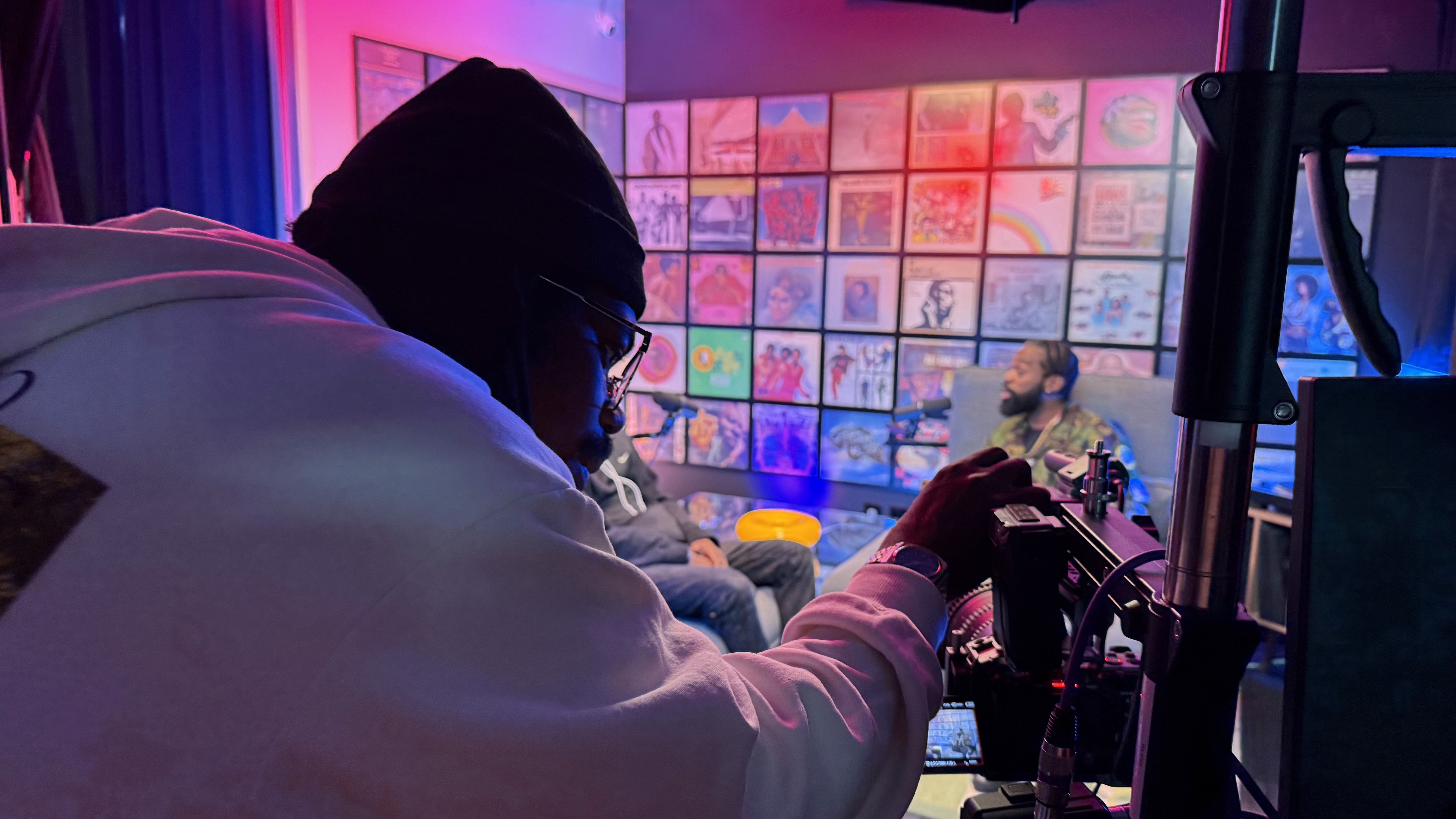
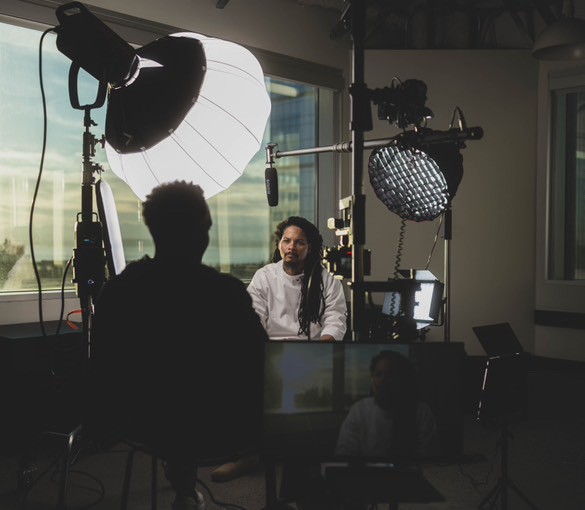
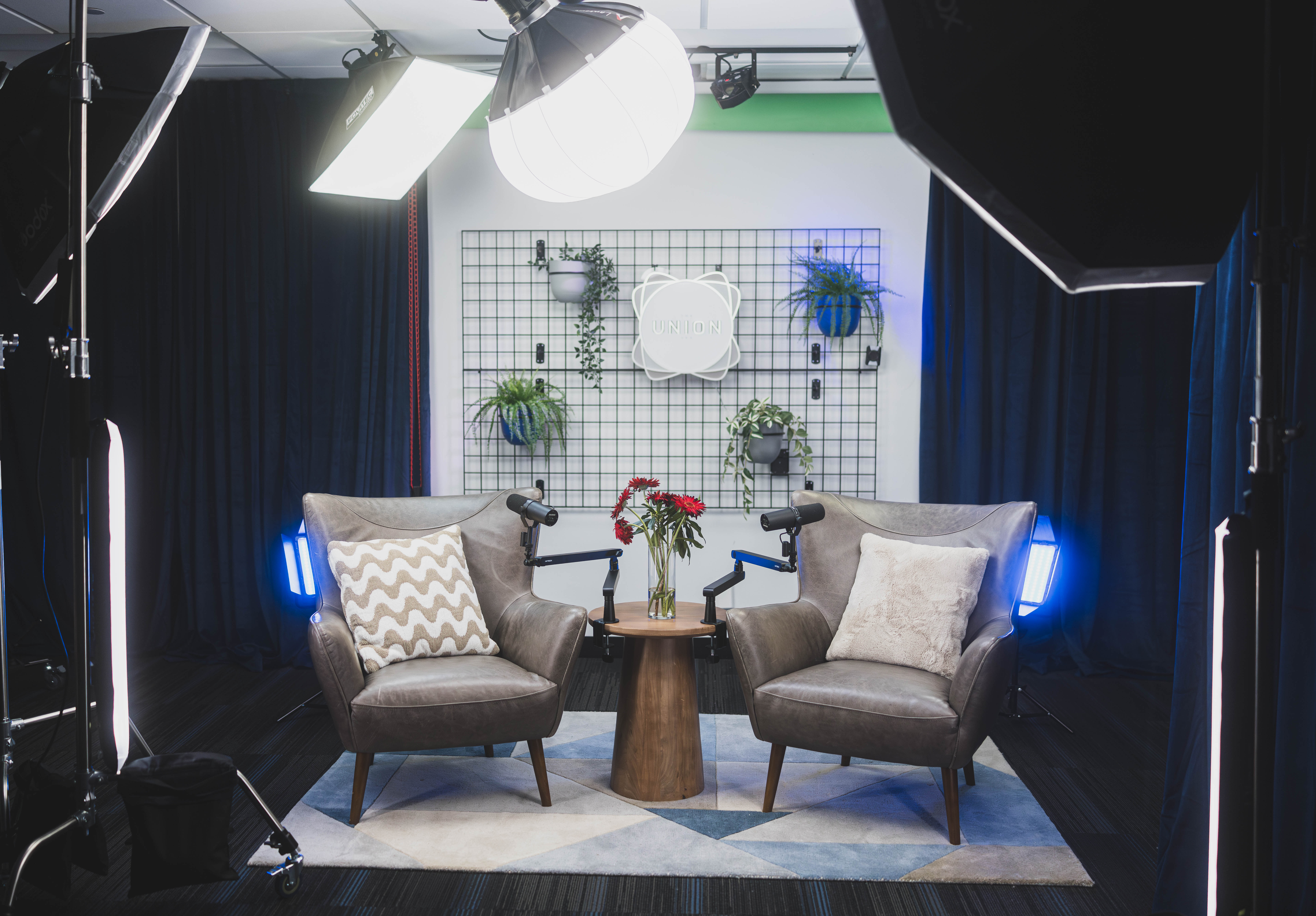
Video adds another layer to all of these. If you plan to publish full episodes on YouTube or short clips on social, the number of people on camera affects your setup. At The Union, the modular sets and color backdrops are designed to switch from a talking head to a panel without a long reset, so moving between a solo episode and a roundtable doesn't mean starting your setup from scratch.
How Tasha Weighs Her Options
Tasha starts by sketching what each format would look like for her show.
Solo: Tasha plays a recording of a kid's question, then explains the answer in plain language with an at-home experiment parents can try. She already does this daily in her classroom, so it plays to her strengths.
Interview: She brings in an expert for each question. A meteorologist for the cloud question, a marine biologist for "Do fish sleep?" That adds authority, but booking a scientist every week while teaching full time sounds exhausting.
Co-hosted: She imagines an illustrative colleague, a fellow teacher who could play the curious parent. Fun, but it doubles the scheduling.
She lands on a hybrid with a clear template:
The question (about 1 minute): a kid asks it in their own voice, recorded with a parent's permission.
The answer (8 to 12 minutes): Tasha explains, solo.
The expert drop-in (optional, 5 to 8 minutes): a short guest segment on some episodes, recorded separately when a guest is available.
Try it at home (2 to 3 minutes): a simple kitchen-table experiment.
This gives her the reliability of a solo show and the flavor of interviews, without making every episode depend on a guest's calendar. If no expert is available, the episode still works.
This is also a moment where a conversation with an experienced producer pays off. The Union's content strategy service covers pre-production planning, audience targeting, and voice, tone and messaging. A producer can look at a template like Tasha's and spot problems early, like a segment that runs long or a transition that will feel awkward on video, before you've recorded ten episodes around it.
Choosing an Episode Length
There is no single ideal length. Industry analyses of average episode length shift from year to year and vary by genre and platform, and plenty of very successful shows run 10 minutes while others run two hours. What matters is that the length fits the content and the listening moment.
A few practical guidelines:
Match the listening moment. Commutes, school pickups, workouts and dishwashing sessions are common podcast moments. Many of them run 20 to 40 minutes.
Cut to the value. If an episode is only strong for 18 minutes, publish 18 minutes.
Be roughly consistent. Listeners like knowing what they're signing up for. A range (say, 15 to 25 minutes) is fine.
Remember the edit. Raw recordings usually run longer than finished episodes. Plan to record more than you publish.
Tasha targets 15 to 25 minutes. Her parents are often listening on the drive to school, and she wants them to finish an episode before drop-off so they can bring the question up with their kid at dinner.
Cadence: Weekly, Biweekly, Monthly or Seasons
Weekly
The classic choice for building a habit. Weekly shows stay top of mind and give the algorithm and your audience regular reasons to come back. They also demand the most consistent effort. If you can't comfortably produce four episodes a month, weekly will burn you out.
Biweekly
Every two weeks is a strong middle ground for beginners, especially interview shows. You still build a rhythm, and you have breathing room for scheduling and editing.
Monthly
Works for deeply researched or narrative episodes, or for hosts with very limited time. The tradeoff is that it's harder for listeners to form a habit, so each episode needs to be strong and well promoted.
Seasons
A season is a batch of episodes (often somewhere between 6 and 12) released on a set schedule, followed by a planned break. Seasons are powerful for busy creators because you can produce in focused bursts. Most hosting platforms let you assign season and episode numbers, and Apple Podcasts lets you mark a show as "episodic" (listen in any order, newest first) or "serial" (listen in order, oldest first). Exactly how seasons display varies by app, so check your host's settings when you get to distribution later in this series.
The key to seasons is communication. Tell listeners when the season ends and when the next one is coming, and post a short update or bonus episode during the break so your feed doesn't go silent.
Tasha's choice
A teacher's year already has seasons. Tasha decides on 10-episode seasons released every other week, timed so that most of her recording happens during school breaks and lighter weeks. Each season covers about 20 weeks of releases. Biweekly gives her room for expert drop-ins and editing, and the season format means she never has to promise something her school calendar can't support.
Do the Time Math Before You Commit
Here's where good intentions meet reality. Estimate the hours one finished episode will take you. A rough beginner breakdown for a 20-minute conversational episode might look like this (your numbers will vary, and they usually shrink with practice):
Research and outline: 1 to 3 hours
Guest coordination (if any): 0.5 to 2 hours
Setup and recording: 1 to 2 hours
Editing: beginners often spend 2 to 4 hours per hour of raw audio, sometimes more
Show notes, artwork and clips: 1 to 2 hours
Publishing and promotion: 1 hour
That's easily 6 to 12 hours per episode at first. Multiply by your cadence. A weekly show at 8 hours an episode is roughly 32 hours a month, which is close to a part-time job. A biweekly show at the same effort is about 16 hours a month.
This is where outside help changes the math. If editing is your bottleneck, The Union's post-production support (mixed audio, a clean video cut, short captioned clips, thumbnails, pull-quotes, show notes and publishing copy) can take hours off your plate. You can see the full menu on the services page. Some creators handle recording themselves and hand off only the edit. Others go full service. Both are valid, and the right mix depends on whether your scarcer resource is time or budget.
Batching: How Bookable Studio Time Makes Your Cadence Repeatable
The single best habit for keeping a schedule is batching: recording several episodes in one session so you build a buffer. Many podcasters aim to have three or four finished episodes in the bank before launch. That way a sick week or a busy month doesn't break the schedule.
Batching works best when your recording environment is the same every time. That's hard at home, where the dog barks, the neighbor mows the lawn and you spend 40 minutes setting up microphones on the kitchen table. You also don't need to own a single piece of gear to record consistently. At The Union, you book the studio, walk in, and the setup is there.
Here's how that fits different formats:
Solo episodes: the Blue Pill studio, which includes sets like The Cove and The Grid, offers a controlled environment for back-to-back recordings. A teleprompter screen is available for host notes, which helps solo hosts stay on outline without reading stiffly.
Interviews and co-hosted shows: the Blue Pill studio also includes sets like Blue Room Central and The Stage. If a guest joins remotely, The Union's producers test remote links before the session so you aren't troubleshooting while your guest waits.
Panels and talk formats: the Red Pill studio is built for larger setups, and its sets include Talk Show and The Cypher.
Editing between sessions: the pre/post-production room gives you a place to edit on site, and fiber internet with Blackmagic Cloud storage means you can review footage while still on set or keep a remote editor in the loop.
Tasha's plan: book a long block, record four "answer" segments and two "try it at home" segments in one sitting on The Cove, then schedule expert drop-ins in a separate session. One studio day can produce the core of a third of her season. You can browse all the sets on the spaces page, or book a tour of the space to picture your show in a specific room.
A note on timing. Guests can book the studio by appointment from 9 AM to 5 PM, Monday through Friday. Members have access 24/7, Monday through Friday. For a teacher like Tasha, member access means she can record on weekday evenings after school instead of waiting for a holiday. Real members record here too: Jolyn GC, co-host of The Come Up Series on YouTube, records her podcast Wealth Rituals at The Union.
Common Mistakes to Avoid
Launching weekly because it sounds serious. A consistent biweekly show beats an abandoned weekly one.
Choosing interviews for "free content." Guests save you talking time but cost you coordination time.
Making every episode depend on one thing. If one missing guest or co-host stops production, build a backup segment.
Skipping the buffer. Launching with zero episodes in the bank means your first busy week becomes your first missed release.
Going silent between seasons. Always announce breaks and return dates.
Changing format every few episodes. Experiment before launch with test episodes, then commit for at least a season.
Do This This Week
Set aside one hour and work through this checklist. By the end you'll have a format and cadence plan you can test.
Write down your show's main goal in one sentence (authority, community, business growth, or something else).
List the formats that fit your concept, and for each, note one strength and one time cost.
Draft a segment template with rough minute counts, like Tasha's four-part outline.
Pick a target episode length range based on when your audience listens.
Estimate hours per episode using the time math above, then add 25 percent.
Count the hours you can honestly give each month, and choose the cadence that fits with room to spare.
Decide whether you'll release continuously or in seasons, and sketch a season length if you choose seasons.
Plan your buffer: how many episodes will you record before launch, and in how many studio sessions?
Mark which steps you'd like help with (strategy, recording, editing) so you can ask about them.
If step 9 has more than one item, that's a good sign it's time for a conversation with a producer. Bring your template and your time math. A strategy conversation can confirm whether your plan is realistic and how to batch it efficiently.
Coming up next
Tasha knows what her show sounds like and when it comes out. In Part 4, Naming and Branding Your Show, she needs a name, a look and a feel that tell parents in a single glance exactly what they're getting.
Start your story at The Union
You don't need a home studio, a closet full of gear or a perfect plan to start. You need a format you can sustain, a rhythm you can keep, and a place where recording is easy enough that you actually show up. That's what The Union is here for: a nonprofit, community-rooted creative hub in downtown Seattle that has been helping educators, entrepreneurs, artists and creators find their on-ramp since 2018.
Want to talk through your format and cadence with the team? Email contact@theunion.io or call 206-551-0964. You can book the studio as a guest by appointment to record a test episode, or apply for membership if you're ready to commit to a regular schedule. The CoCreate Podcast membership is $300 per month with a $100 sign-up fee and a two-month commitment, and it includes the media lab for both DIY and full-service productions. CoCreate memberships currently have a waitlist of about a month, so if you're planning a season, now is a good time to get in line.
The full series
This is Part 3 of 24 in Starting a Podcast at The Union (Content Strategy stage). Previous: Part 2, Who Is Your Podcast Really For? Finding Your Listener and Niche. Next: Part 4, Two Seconds to Win a Listener: Naming and Branding Your Show.