
Our example creator, Tasha, has done the hard part. Over the last few weeks (if you've been following this series, you know her: a middle school science teacher in Rainier Valley building a podcast for parents of curious kids, where every episode answers one real question a kid asked), she has shaped her concept, written a run-of-show, and booked her first guest. Today she is walking into the studio with a printed outline, a bottle of water, and a nervous stomach.
Her episode question came from a seventh grader: "Why is the sky blue at lunch but orange at sunset?" Her guest, for the purposes of this example, is an atmospheric scientist we'll call Dr. Lena Ortiz. Everything is booked. Now Tasha has to actually host.
This is the moment where a lot of new podcasters freeze up. Recording a session feels like a performance, and it is one, but it is also a skill with repeatable parts. Confident hosts are made through structure, practice, and a few habits that keep small problems from turning into ruined takes. In this post, Part 11 of our "Starting a Podcast at The Union" series, you'll learn how to run a recording session from the first sound check to the final "thanks for joining us," including how to handle the things that go wrong in the middle.
The 30 Minutes Before You Hit Record
Most recording problems are created before the session starts. The good news is that most of them can be prevented in about half an hour.
Plan to arrive at least 30 minutes before your guest. Use that time for three things: setting the room, checking your signal chain, and getting your own head in the right place.
Set the room
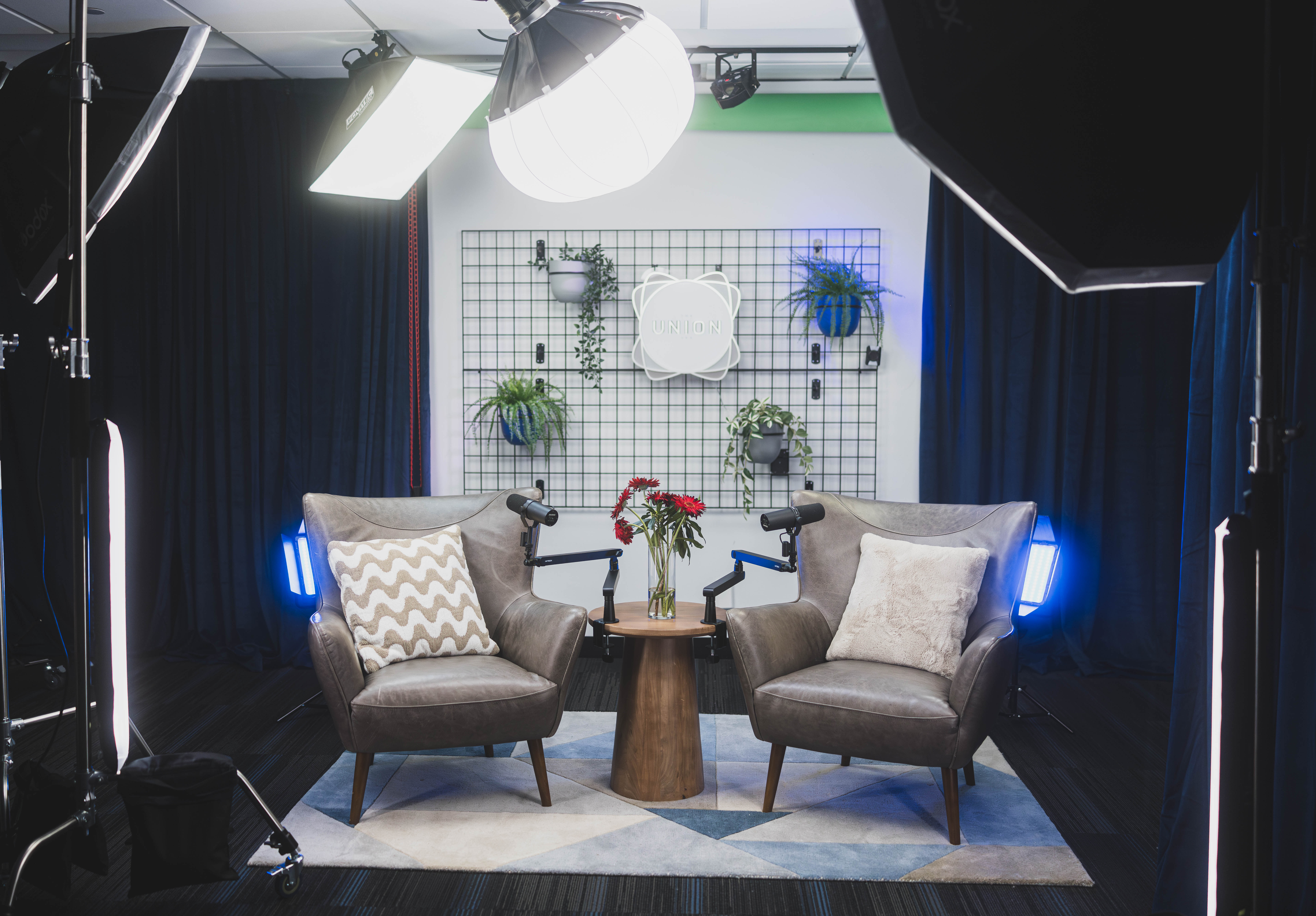
Decide where everyone sits and why. For a two-person conversation, angle the chairs so you and your guest can see each other's faces easily. Eye contact keeps a conversation natural. Place water within reach, but away from microphones and equipment.
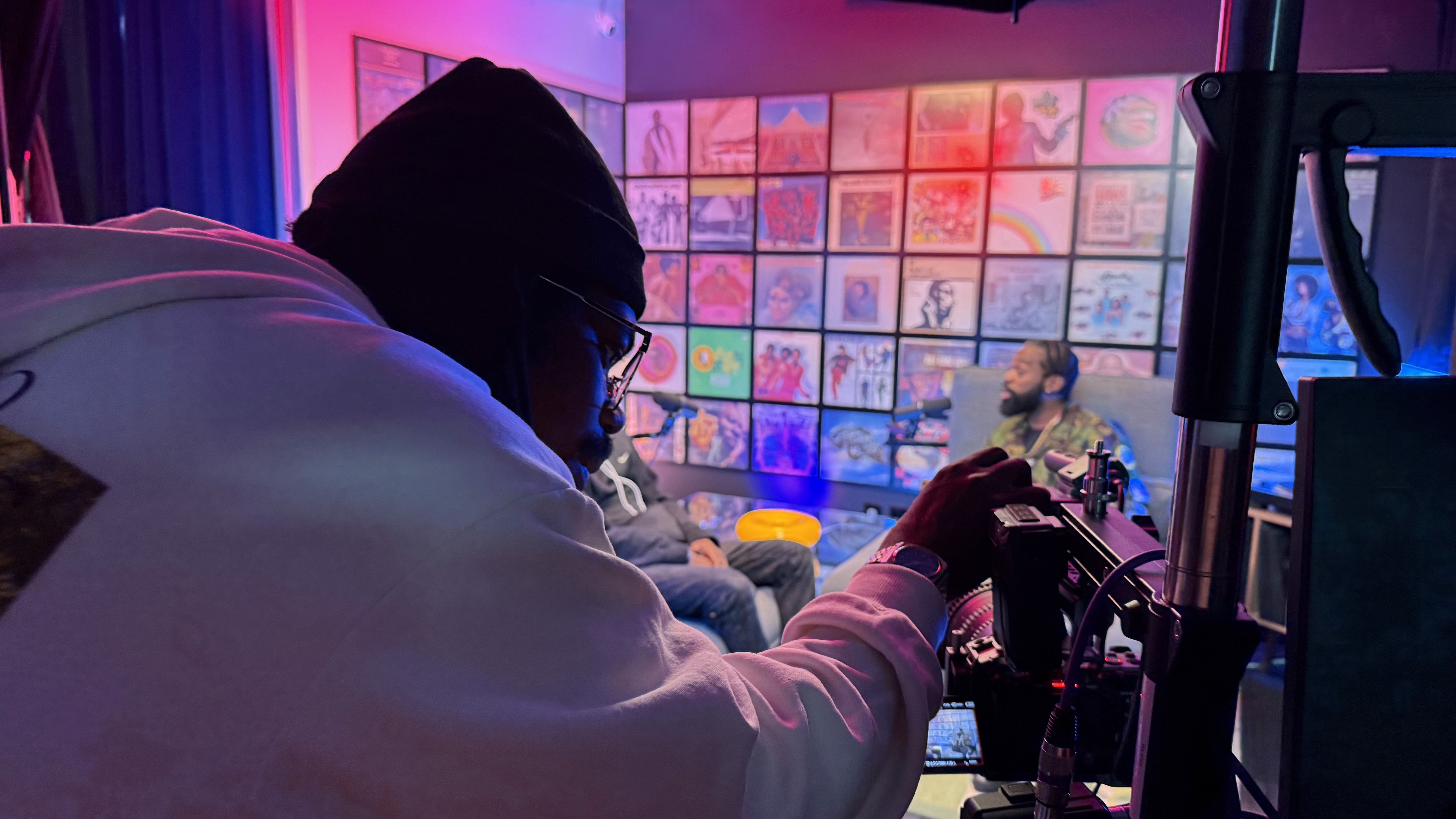
At The Union, this is where choosing the right set pays off. In our example, Tasha books The Cove, one of the sets inside the Blue Pill studio. The Red Pill studio offers other sets, such as Talk Show and The Cypher. Because the sets are modular and use color backdrops, the production team can shift a space from a talking-head setup to a panel without a long reset. If you're not sure which set fits your format, a studio walkthrough with the team can help you find out. You can preview the options on the spaces page.
Check your signal chain
Your signal chain is the path your voice takes: mouth, microphone, cable, interface or recorder, file. Check each piece with a real test recording, then listen back on headphones. A meter that moves is a good sign, but your ears are the real test.
Sample rate and bit depth: 48 kHz and 24-bit is a common standard, especially if your podcast also has video. Confirm whatever settings your editor expects.
Levels: Aim for speaking peaks roughly between -12 and -6 dBFS on a digital meter. That leaves room for laughter or excitement without clipping (distortion when the signal goes past 0 dBFS). Some recorders support 32-bit float, which is more forgiving, but good levels still matter.
Mic distance: Many dynamic podcast mics sound best a few inches from the mouth, often around 2 to 6 inches, slightly off-axis to reduce popping "p" and "b" sounds. The right distance varies by mic, so test it.
Headphones on: Everyone who is speaking should wear headphones if possible. It helps people hear themselves and keeps their distance from the mic consistent.
Backup: Record a second copy whenever you can, whether that's a backup recorder, a second track, or camera audio for sync.
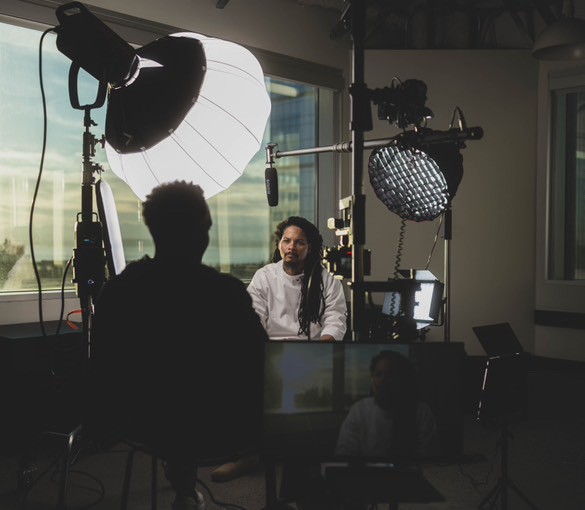
The Union's media lab includes a proper recording and engineering setup, plus cinema and vlog camera bodies for video podcasts. If you're working with a producer, they prep a run-of-show, confirm guest logistics, test remote links, and set the room before your session. If you're going the do-it-yourself route, ask the team to walk you through the setup during your first booking so you build the habit correctly from day one.
Get your head right
Tasha spends her last ten minutes doing what she does before a lesson: she reads her opening line out loud three times, puts her phone in airplane mode, and drinks water. Warm up your voice by talking, humming, or reading a paragraph aloud. Your first two minutes of speech are usually your stiffest, so spend them before the red light comes on.
Warming Up Your Guest Before the Recording Starts
Your guest is probably more nervous than you are. Even experts who lecture for a living can stiffen up when a microphone appears. Your job in the first five to ten minutes is to make them comfortable.
When Dr. Ortiz arrives, Tasha doesn't jump into the interview. She shows her where to sit, offers water, and chats about the drive downtown. Then she walks through what's about to happen:
How long the recording will run (Tasha says "about 40 minutes, for an episode that will end up around 25").
The rough shape of the conversation, without reading every question in advance.
Permission to restart: "If you trip over a sentence, just pause and start it again. We'll fix it in editing."
Who the audience is: "Picture a parent driving their kid to school, both listening together."
That last point matters enormously for Tasha's show. Scientists naturally reach for jargon. Telling Dr. Ortiz up front that the listener might be a ten-year-old gives her permission to explain things simply.
Then do a sound check that doubles as a warm-up. Ask the guest something easy and unrelated, like "What did you have for breakfast?" Check their levels while they answer. People relax when they talk about something low-stakes.
Structuring the Interview Flow
A good interview feels loose to the listener, but it usually has a clear structure underneath. Think of it like a lesson plan: a hook, a build, a payoff, and a wrap-up. Here is the flow Tasha uses, which works for many interview-based shows.
1. The cold open or hook (30 to 90 seconds)
Tasha starts with the kid's question, read in her own words: "A seventh grader asked me this one in April, and I didn't have a great answer. Why is the sky blue at lunch, but orange at sunset?" Some shows record the hook at the end of the session once they know the best moment. That's fine. Just make sure you capture something you can use.
2. The introduction (1 to 2 minutes)
Introduce the show briefly and introduce your guest with only the credentials that matter to this episode. A long bio loses listeners. One or two sentences on why this person can answer this question is enough.
3. The core conversation (15 to 25 minutes of final content)
Break the main conversation into two or three segments, each with one clear idea. For Tasha's episode:
Segment one: What sunlight is actually made of.
Segment two: Why air scatters blue light more than red light.
Segment three: Why sunset light travels through more atmosphere, and what a family can see for themselves tonight.
Segments give you natural places to breathe, transition, and later insert a break or sponsor message if your show ever has one.
4. The takeaway (2 to 3 minutes)
Tasha ends every episode with a "try this at home" moment. For your show, this might be a summary, a call to action, or a final question you ask every guest. A recurring closing question builds familiarity and gives listeners something to anticipate.
5. The outro (under 1 minute)
Thank the guest, tell listeners where to find them, and invite listeners to send in the next question. Keep it short and warm.
The Union's teleprompter screen can hold host notes, so Tasha keeps her segment headings and key follow-up prompts visible without shuffling paper near a microphone. Paper rustles. Screens don't.
Pacing: How to Keep a Conversation Moving
Pacing is the difference between an episode people finish and one they abandon at minute nine. A few practical rules help.
Use your outline as a map, and let the guest drive sometimes
Write questions, but listen more than you read. The best follow-up question is often hiding in your guest's last answer. When Dr. Ortiz mentions that sunsets look more dramatic after wildfires, Tasha sets her next question aside and asks about it. Seattle parents who lived through smoky summers will lean in to that moment.
Ask open questions
Questions that start with "how," "why," or "what was it like" invite stories. Questions that start with "did," "is," or "do you" often get one-word answers. Compare "Is light made of colors?" with "How would you explain to a kid that sunlight has colors hiding in it?"
Watch the length of answers
Conversational speech tends to run somewhere around 140 to 160 words per minute, though everyone varies. A single answer that goes past three or four minutes often needs a gentle redirect, and editors can trim, but they can't add clarity that was never recorded.
Embrace the pause
Nervous hosts fill every silence. Try counting to two after your guest stops talking. Very often they'll add the most honest, interesting part of their answer during that pause. Your editor can tighten silences later.
Mind the clock without staring at it
A good rule of thumb is to record about 1.5 times your target episode length. For a 25-minute episode, that's around 35 to 40 minutes of recording. Much longer and editing gets painful; much shorter and you have nothing to cut.
This is one of the biggest benefits of working with a Union producer. During a session, producers monitor pacing and clarity while capturing clean audio and video, which frees you to stay present with your guest. For a first-time host, having someone else watch the clock and the meters can feel like getting your whole brain back.
Troubleshooting Mid-Record
Something will go wrong. It always does. Professional hosts are simply calm about it, because they have a plan. Here are the most common problems and what to do.
You or your guest flub a line
Stop, pause for two seconds, and repeat the whole sentence from the beginning. Saying "pickup" or clapping once before you restart makes the spot easy for your editor to find. Restarting in the middle of a sentence makes edits sound choppy.
A noise interrupts
A phone buzz, a dropped pen, a chair squeak, a mic bump: pause, let the noise finish, wait a beat, and repeat what was said during it. Don't talk over noise hoping it won't be noticeable. It usually is.
The guest rambles or goes off-topic
Wait for a breath, then bridge back: "That's fascinating. Bring me back to the sunset for a second, because I think parents are wondering..." Summarizing their point in one sentence before redirecting shows respect and keeps the flow.
The guest freezes or goes flat
Ask them for a story instead of an explanation: "When did you first notice this as a kid?" Personal memories unlock energy. You can also take a short break. Stop for a minute, chat, drink water, and restart.
The audio sounds wrong
If you hear distortion, crackling, a buzz, or a sudden drop in level, stop the conversation. It's far better to lose two minutes than to lose a whole segment. Check cables, levels, and headphone connections. Note the timestamp so the editor knows where the issue started.
Your remote guest's connection drops
Have a plan before you start: agree that if the call drops, both people rejoin the same link and you restart the last question. Ask remote guests to record a local copy on their end when possible. The Union's dedicated fiber internet, upload and download, supports smooth livestreaming and rapid file transfers, and its integrated Blackmagic Cloud storage keeps a remote editor in the loop. Strong infrastructure won't fix a guest's weak home Wi-Fi, but it helps keep the studio side of the connection from being the weak link. We'll go much deeper on this in the next part.
Leave markers for your editor
Whatever happens, make it easy to find later. A clap, a spoken "mark," or a quick written timestamp on your notes can save your editor (or future you) an hour of searching.
Wrapping the Session Like a Pro
When the conversation ends, the session isn't quite over. Tasha's last ten minutes are as structured as her first.
Record room tone: Everyone sits silently for 30 seconds while the recording runs. Editors use this background sound to patch gaps cleanly.
Grab pickups: Re-record any intro, question, or line you weren't happy with while the mics are still set.
Ask a bonus question: "Is there anything I didn't ask that you wish I had?" often produces great material for short clips.
Confirm logistics: Spell-check the guest's name, title, and links for show notes. Confirm how they'd like to be tagged when the episode goes out.
Back up immediately: Copy files to at least two places before you leave the room.
Thank them warmly: A handwritten note or quick email afterward builds a relationship that brings guests back.
At The Union, the work flows straight into the next stage. The pre/post-production room is set up for editing, and if you're working with the team, producers move into post-production: mixed audio, a clean video cut, short captioned clips, thumbnails, pull-quotes, show notes, and publishing copy. You can explore that full-service support on the services page.
Your Recording Day Checklist
Print this, save it to your phone, or tape it inside your notebook.
Arrive 30 minutes early and confirm your set is ready.
Put your phone and your guest's phone in airplane mode.
Check sample rate, bit depth, and file destination.
Set levels so speaking peaks land roughly between -12 and -6 dBFS.
Do a test recording and listen back on headphones.
Start a backup recording.
Warm up your own voice and read your opening line aloud.
Brief your guest: length, shape, audience, and permission to restart.
Run a casual sound check with your guest.
Record your hook, intro, segments, takeaway, and outro.
Use claps or "pickup" to mark flubs and noise.
Record 30 seconds of room tone.
Capture pickups and a bonus question.
Confirm guest name spelling, title, and links.
Back up files to two locations before you leave.
How Tasha's First Session Went in Our Example
In our example, Tasha's recording wasn't perfect. Her phone buzzed once (she'd forgotten to switch it), she stumbled over the word "wavelength" three times, and Dr. Ortiz drifted into a five-minute tangent about satellite data. But Tasha paused, restarted cleanly, and redirected with a smile. The wildfire sunset tangent she followed on instinct turned out to be the best four minutes of the episode.
The biggest lesson she took away: confidence comes from preparation and permission. Preparation means knowing your structure and your checklist. Permission means accepting that mistakes are expected and easy to fix when you mark them well.
Do This This Week
Run a practice session before you ever record a real guest. It takes about an hour.
Pick a friend, family member, or coworker and choose a topic they love.
Write a five-part flow: hook, intro, two segments, takeaway.
Record 20 minutes using whatever you have, even your phone.
Deliberately practice one restart, one redirect, and one two-second pause.
Listen back and write down three things: where the energy dropped, where you talked over your guest, and the best moment you didn't plan.
If you want to practice in a real studio with a producer watching your pacing, that's exactly what a first booking at The Union can be. A short conversation with the team can help you decide whether a do-it-yourself session or full-service support fits where you are right now.
Coming up next
Not every guest can make it downtown. In Part 12, Remote and Hybrid Recording, we'll cover how to capture great conversations when your guest is across the city or across the world, and how to keep everyone sounding like they're in the same room.
Start your story at The Union
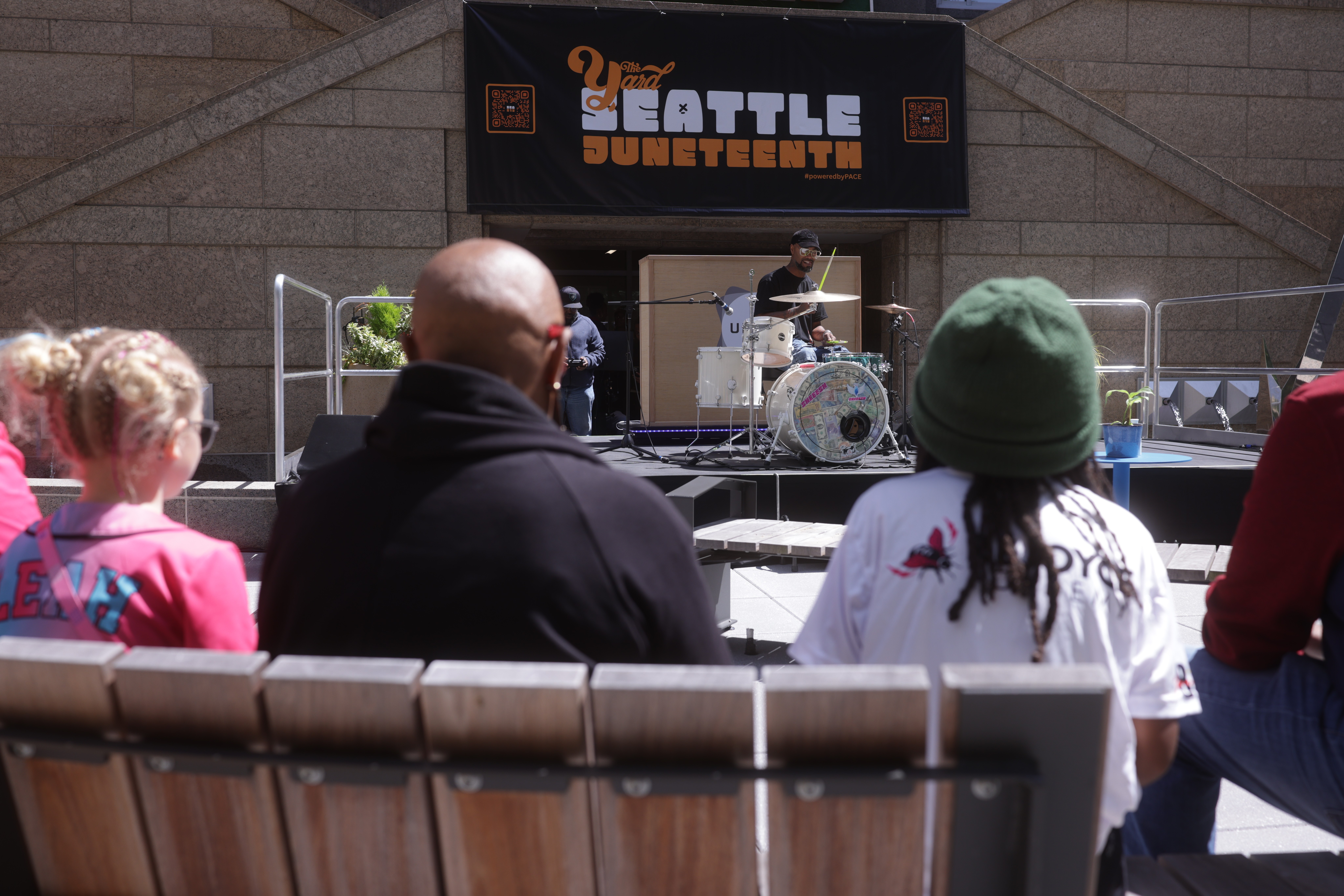
You don't need to own a microphone, a camera, or years of hosting experience to start. You need a question worth answering and a place built to help you answer it. Since opening on Juneteenth 2018, The Union has grown into a creative hub with more than 15 production sets, a team of producers, and a community of Seattle educators, entrepreneurs, artists, and creators, including members like Jolyn GC, who records her podcast Wealth Rituals here.
Ready to run your first session? Email contact@theunion.io or call 206-551-0964 to talk with the team about a content strategy session or studio walkthrough. Guests can book the studio by appointment, weekdays from 9 AM to 5 PM. If you're planning to record regularly, apply for membership: the CoCreate Podcast membership is $300/month with a $100 sign-up fee and a 2-month commitment, and includes media lab access for do-it-yourself and full-service productions plus pre-paid parking for you and your guests. CoCreate memberships currently have a waitlist of about one month, so applying now means you'll be ready to record when your spot opens. And as a nonprofit program of PACE, every booking helps fund residencies, fellowships, and education programs that open the door for the next Seattle storyteller.
The full series
This is Part 11 of 24 in Starting a Podcast at The Union (Content Production stage). Previous: Part 10, How to Book Great Podcast Guests and Make Them Glad They Came. Next: Part 12, Record Guests Far from Seattle Without Losing Sound Quality.